
Expert Gallery Wall Installation Services for Homes
How to Design and Install a Gallery Wall That Looks Intentional and Professional
A gallery wall can transform a room, but only when it is carefully planned and precisely installed. The difference between a cohesive display and a cluttered wall usually comes down to layout, spacing, and secure mounting.
Professional gallery wall installation combines design planning with technical picture hanging. This ensures artwork is evenly spaced, level, safe, and visually balanced—especially on staircases, high ceilings, or delicate wall finishes.
At Seido Art Services, we design and install gallery walls by measuring the space first, planning the layout in advance, and mounting each piece with fixings matched to the wall type and artwork weight. This process removes guesswork and produces a gallery wall that looks intentional rather than improvised.
Short Answer: What a Professional Gallery Wall Service Includes
A professional gallery wall service typically includes:
Measuring the wall and assessing lighting and architecture
Designing a balanced layout before anything is hung
Advising on frame sizes, spacing, and piece selection
Creating mockups or floor layouts for approval
Using correct fixings for each wall type and artwork weight
Installing, leveling, and aligning every piece precisely
Making final adjustments to spacing and visual flow
A planned layout prevents uneven spacing and visual clutter.
Correct mounting prevents artwork from shifting or falling over time.
Why Gallery Walls Are Difficult to Get Right
Most gallery wall problems come from hanging without a plan. Common mistakes include:
Uneven spacing between frames
Misaligned rows or columns
Incorrect fixings for heavy or delicate pieces
Hanging artwork at inconsistent heights
Starting without a clear visual hierarchy
A gallery wall needs structure before it needs style.
Without layout planning, even beautiful artworks can feel chaotic.
How Professionals Design a Gallery Wall Layout
Professional gallery wall design starts with measurement and planning, not decoration.
Before installation, we measure:
Wall width and height
Ceiling height
Furniture placement
Natural and artificial lighting
Architectural features such as stairs, alcoves, or mouldings
This information determines how the layout should flow across the wall.
Measuring the wall first ensures consistent spacing and visual balance.
A planned layout gives each artwork equal visual weight.
How to Choose Frames, Sizes, and Spacing
Frame selection and spacing determine whether a gallery wall feels calm or crowded.
We guide clients on:
Frame styles and finishes that work together
Mixing small and large pieces without overpowering the wall
Keeping spacing consistent across the entire layout
Aligning frames visually even when sizes vary
Consistent spacing makes a gallery wall feel ordered and finished.
Visual balance matters more than symmetry.
Previewing the Layout Before Installation
Professionals preview the layout before committing to the wall. This can be done:
On the floor using the real artworks
With digital mockups
With paper templates placed on the wall
Previewing allows changes before holes are made.
Mockups prevent costly mistakes and unnecessary wall damage.
How Professional Picture Hanging Works
Once the layout is approved, installation begins.
Professional picture hanging is not just about hanging straight—it is about hanging safely and permanently.
We select fixings based on:
Wall type (plaster, masonry, drywall, wood, stone)
Weight of each piece
Size and centre of gravity
Long-term stability
Professional picture hangers match fixings to wall type and artwork weight.
Correct mounting protects both the artwork and the wall surface.
Hanging Gallery Walls in Challenging Spaces
Some gallery walls require specialist techniques, especially in:
Staircases with angled walls
Narrow hallways
High ceilings
Areas with furniture or architectural obstacles
We use ladders, platforms, and precise leveling tools to maintain consistent spacing and alignment across changing heights.
Staircase gallery walls require precise leveling to maintain visual flow.
High ceilings require controlled vertical spacing to avoid visual gaps.
Achieving Perfect Alignment and Visual Flow
Every piece is installed with millimetre-level precision.
We adjust for:
Horizontal alignment
Vertical flow
Consistent gaps between frames
Visual symmetry or intentional asymmetry
Professional alignment makes a gallery wall feel calm and deliberate.
Final adjustments turn a group of frames into a cohesive display.
Modern Gallery Wall Techniques and Trends
Modern gallery walls often use advanced installation techniques, including:
Floating displays with nylon wires or hidden brackets
Mixed media arrangements (art, mirrors, objects, sculpture)
Asymmetrical layouts for dynamic movement
Themed collections based on colour, subject, or period
Floating installations create a sense of lightness and space.
Mixed media layouts add depth without clutter when planned correctly.
Full-Service Gallery Wall Design and Installation
At Seido Art Services, we manage the entire process from concept to completion:
Initial consultation to understand your space and goals
Layout design and planning
Previewing and refining the arrangement
Professional installation using safe, secure fixings
Final styling adjustments for balance and flow
A full-service approach ensures consistency, safety, and precision.
Why Homeowners Choose Seido Art Services
Homeowners choose Seido Art Services because we combine design insight with technical expertise. Our work is trusted in luxury homes where precision, safety, and finish matter.
Our clients value:
Expert picture hangers with experience in delicate and heavy artworks
Bespoke gallery wall layouts tailored to each home
Safe installation that protects walls and finishes
Professional service with minimal disruption
A professionally installed gallery wall looks intentional, balanced, and permanent.
What a Well-Designed Gallery Wall Achieves
A gallery wall is more than decoration. It is a visual system that turns individual pieces into a single, cohesive story.
When designed and installed properly, a gallery wall:
Creates a clear focal point
Reflects personal taste without clutter
Enhances the architecture of the space
Makes artwork feel valued and complete
A well-installed gallery wall transforms a wall into a curated display rather than a collection of frames.
Invest in a professional gallery wall installation today, and let us help you showcase your treasured collections safely and beautifully.
Gallery Wall Design and Installation – Frequently Asked Questions
What is a gallery wall?
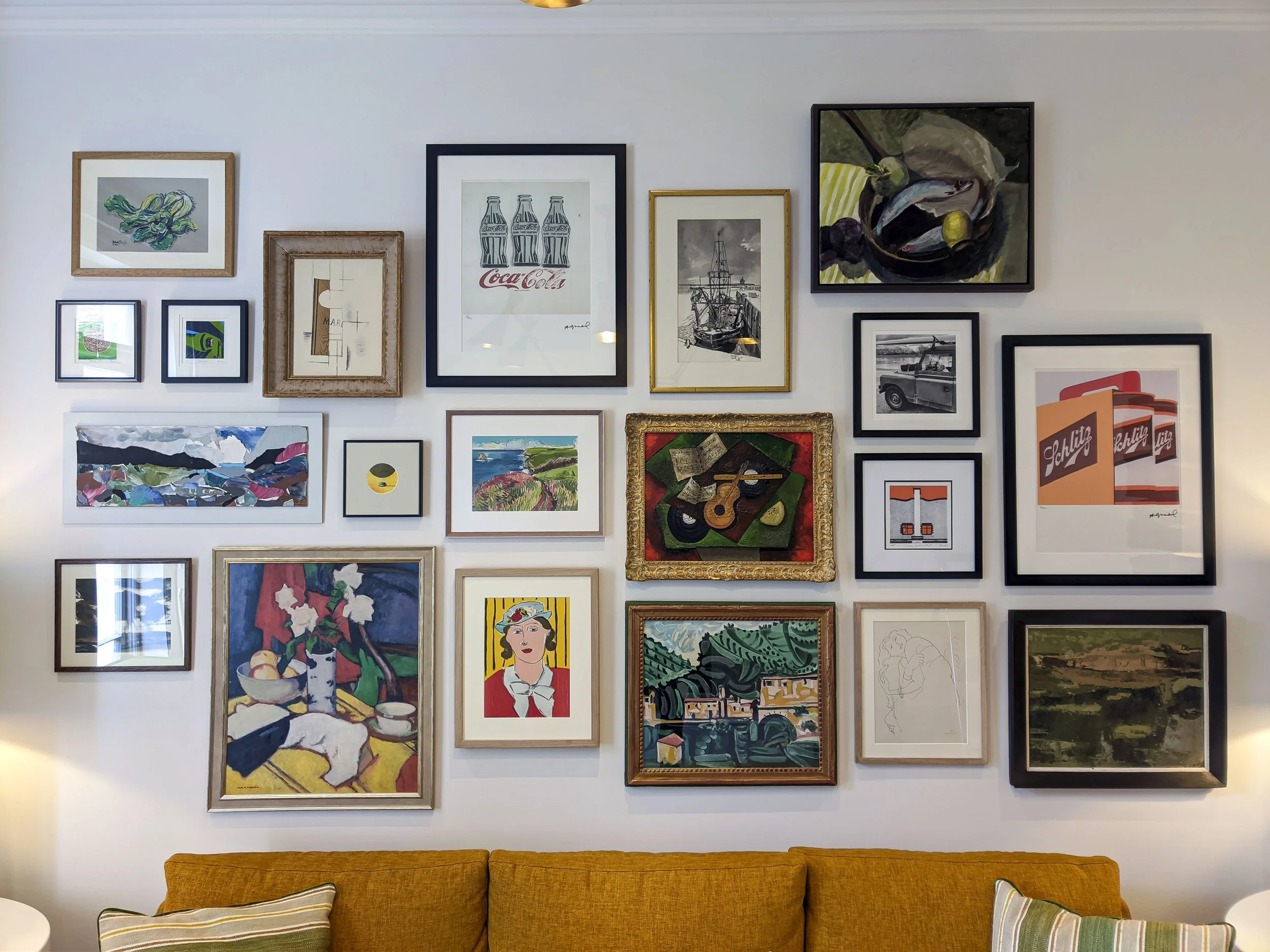
A gallery wall is a curated arrangement of multiple artworks, photographs, or objects displayed together on a single wall. A well-designed gallery wall uses consistent spacing, alignment, and visual hierarchy to create a cohesive display rather than a random collection.
A gallery wall turns individual pieces into one unified visual composition.
What does a professional gallery wall service include?
A professional gallery wall service includes measuring the wall, designing a layout, previewing the arrangement, selecting fixings, and installing each piece with precise alignment. The goal is to ensure the wall is safe, balanced, and visually intentional.
Professional services combine design planning with technical installation.
Should I hire a professional to hang a gallery wall?
You should hire a professional if your gallery wall is large, heavy, high, on a staircase, or installed on delicate surfaces. Professionals prevent uneven spacing, misalignment, and wall damage by planning the layout and using correct fixings.
Professional picture hanging reduces risk and improves visual quality.
How high should a gallery wall be hung?
A gallery wall should be hung so the centre of the overall arrangement sits at eye level, typically around 155-160 cm from the floor. On staircases, the centre should follow the angle of the stairs to maintain visual flow.
Correct hanging height makes a gallery wall feel natural and balanced.
How do you space pictures in a gallery wall?
Pictures in a gallery wall should be spaced evenly, usually 4–7 cm apart, depending on wall size and frame scale. Consistent spacing is more important than exact measurements.
Consistent spacing creates order and visual calm.
Can you mix different frame sizes and styles in a gallery wall?
Yes, different frame sizes and styles can be mixed as long as spacing, alignment, and visual balance are controlled. Mixing works best when there is one unifying element, such as colour, material, or theme.
Controlled variation creates interest without clutter.
How do you hang a gallery wall on plaster or delicate walls?
Gallery walls on plaster or delicate walls require specialised fixings matched to the wall structure and artwork weight. Using incorrect fixings can crack plaster or cause artwork to slip.
Correct fixings protect both the wall and the artwork.
How do you hang a gallery wall on a staircase?
A staircase gallery wall is planned so the centre of the layout follows the angle of the stairs. Each piece is leveled in relation to the overall flow rather than the floor.
Staircase gallery walls require angled alignment to look intentional.
How long does gallery wall installation take?
Most gallery wall installations take between two and five hours, depending on the number of pieces, wall type, and complexity of the layout. Larger or staircase installations may take longer.
Time depends on planning complexity and wall conditions.
What are the most common gallery wall mistakes?
The most common mistakes are hanging without a plan, uneven spacing, poor alignment, incorrect fixings, and inconsistent height.
Planning prevents nearly all gallery wall problems.
Can gallery walls include objects, mirrors, or sculpture?
Yes, gallery walls can include mirrors, objects, and small sculptures when the layout is planned to support the additional weight and depth.
Mixed-media gallery walls require stronger fixings and careful spacing.
