
Japanese Screen Installation Services in London
info@seidoartservices.com // 07547323641
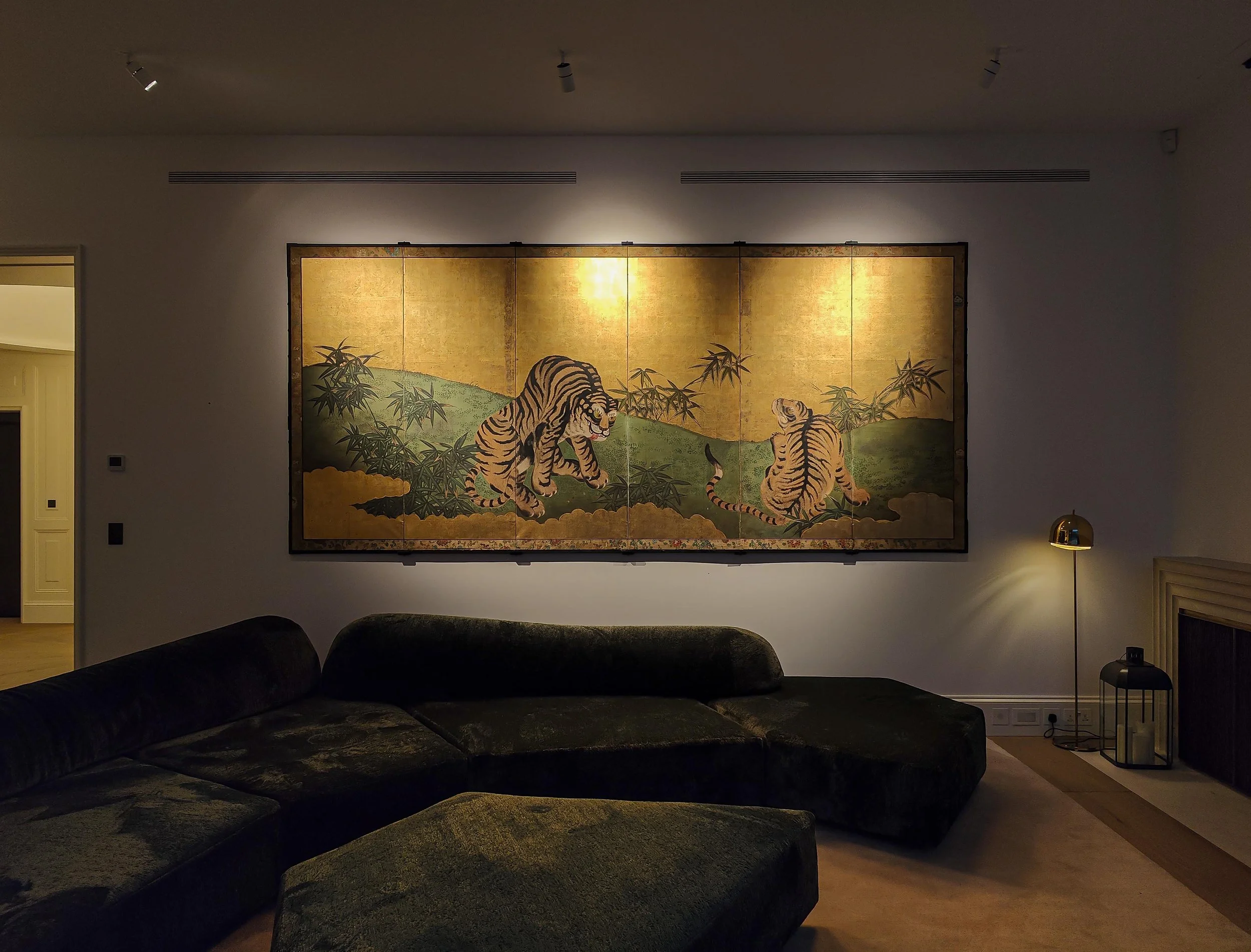
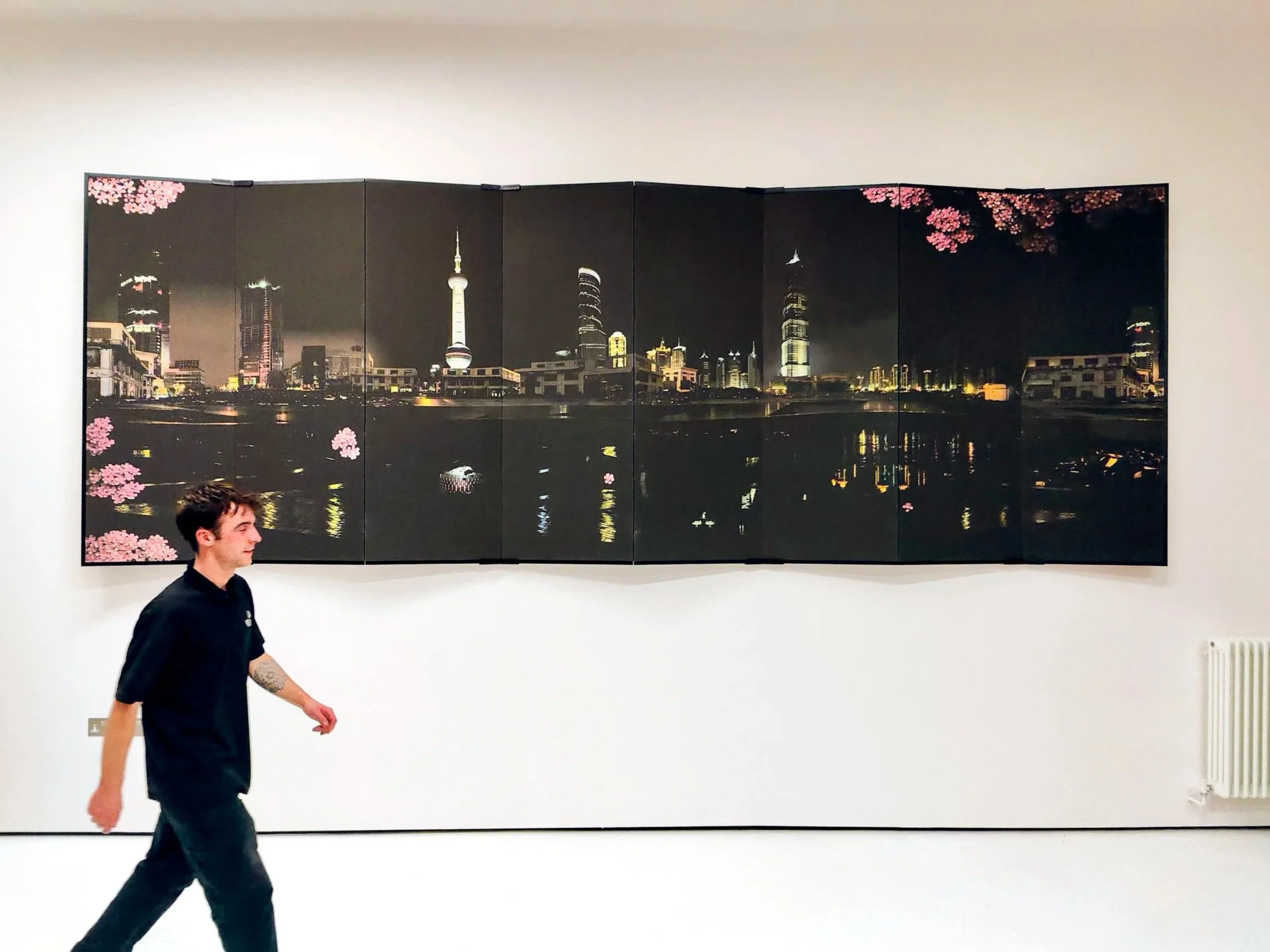
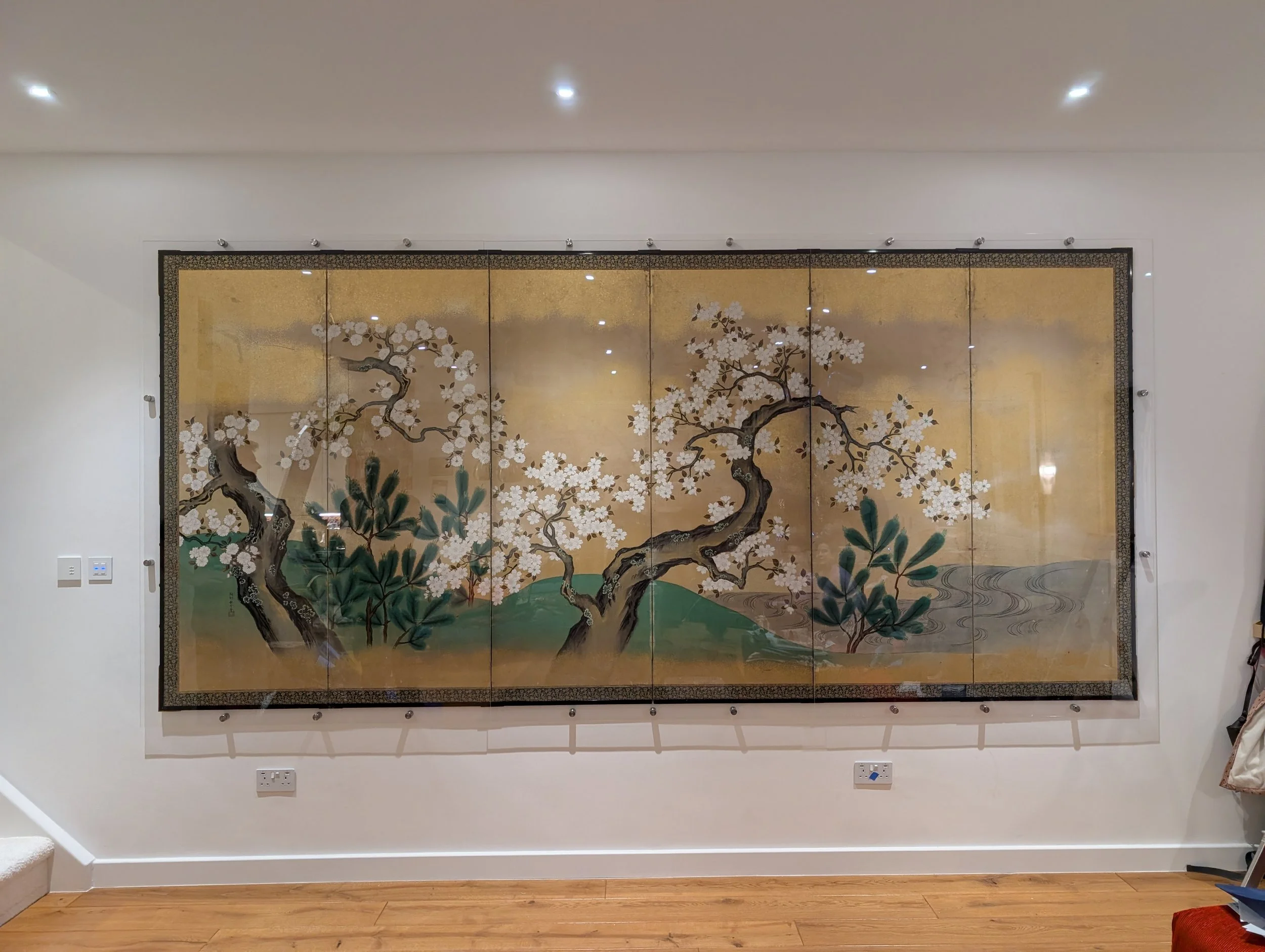
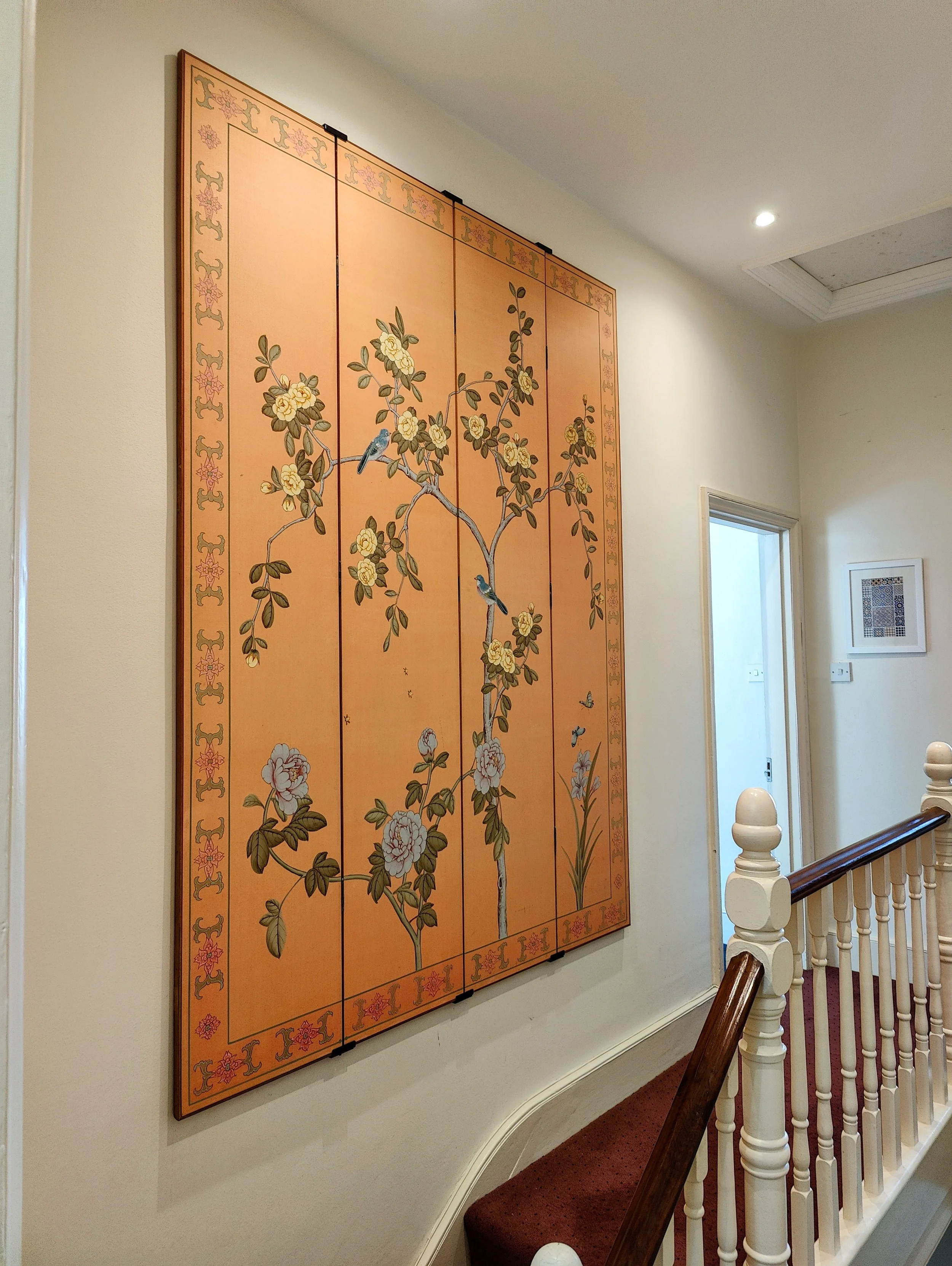
A Japanese screen, or byōbu, was never designed to be lifted or suspended. Traditionally built as a free-standing room divider, its structure depends on sitting on the floor, with the folding joins between panels built for gentle articulation, not for bearing weight. Hanging one on a wall means working against its original construction, which is exactly why this is a distinct specialism rather than an extension of standard picture hanging. Seido Art Services provides specialist installation for Japanese screens across London, for private collectors, galleries and interior designers.
Why These Screens Need a Different Approach
The vulnerability in a byōbu sits at its folding joins. The paper or silk hinges connecting each panel were built to allow movement, not to carry load, so lifting a screen by an edge or a single point puts direct strain on the weakest part of the object. Depending on the screen's age and condition, this can cause a structural break at the hinge, tearing to the hinge material itself, or damage to the painted or decorative surface nearby. None of this is obvious from simply looking at a screen, which is exactly why it catches people out.
How We Handle an Installation
We always work with a three or four person team when handling a Japanese screen, sized so that every technician is supporting the screen evenly across a different join rather than one or two points taking the weight of the whole piece. Every movement is agreed before the screen is touched, and lifting is done slowly and deliberately, treating the object as a single continuous structure rather than a series of independent panels. This is a controlled, planned process rather than a quick lift, which is the main reason it needs a specialist team rather than a general installer.
Protecting the Surface
Many screens carry painted or decorative surfaces on silk, paper or linen, materials that can be affected by even minor contact with bare skin or an unprepared surface. Our technicians wear clean protective gloves whenever handling an exposed painted, silk or paper surface, and we prepare and protect the surrounding area before the screen is positioned. We treat every screen as a conservation-sensitive object throughout, regardless of its age or declared value.
Specialist Brackets, Not Standard Fixings
Standard picture fixings aren't built for a folding screen, so we source and supply specialist brackets, manufactured in either Japan or the USA, designed specifically for this kind of installation. Rather than fixing at a single point, these brackets support the screen across its joins, reinforcing exactly the sections that are otherwise most vulnerable, instead of placing new stress on them. Before any bracket is fitted, we assess the wall's construction and how weight will distribute across the screen once mounted, so the finished installation is both structurally sound and visually balanced.
Our Experience With These Installations
Having completed multiple Japanese screen installations across private residences, galleries and design-led interiors, we've built a practical understanding of how different screens behave, how to anticipate a fragile join before it becomes a problem, and which bracket system suits a given screen's size and condition. This sits alongside the wider technical grounding our team brings to fine art handling generally, developed through installation experience across institutions including Tate Modern and Sotheby's, applied here to a genuinely specialist category of object.
How the Process Works
We start with a conversation about the screen's dimensions, materials and condition, and where necessary we'll attend the site in person to assess access routes and wall condition before providing a quotation. On the day, a three or four person team carefully lifts, supports and positions the screen using protective gloves and controlled handling throughout, fitting specialist brackets designed to protect the folding joins rather than strain them. Once the screen is securely installed, we review the positioning with you to confirm alignment, height and presentation are exactly as intended.
Why Clients Choose Us for This Work
Japanese screens combine structural fragility with real cultural and often financial significance, which means a mistake during installation isn't easily undone. Clients choose us because we bring a properly sized team, gloves and protective handling as standard rather than an afterthought, and brackets engineered for this exact object type rather than adapted from general picture hanging hardware. That combination of planning, technique and the right equipment is what allows a screen with genuine age or fragility to be installed with confidence rather than treated as a risk.
If you require professional Japanese screen installation in London, contact us to discuss your project.
Frequently Asked Questions
Still have questions? Take a look at the FAQ or reach out anytime.
-
Yes, and this is generally preferable to taking a screen apart. Handled correctly, with the weight properly distributed across a trained team, a screen can be lifted and installed as a complete unit, which avoids the additional risk of separating and later realigning individual panels.
-
We source and supply the specialist brackets ourselves, manufactured in Japan or the USA specifically for folding screen installation, so there's nothing separate for you to find or order.
-
We use a three or four person team as standard, sized so that support is distributed evenly across the screen's folding joins rather than concentrated at one or two points.
-
In most cases, yes, provided the installation accounts for its specific condition. We assess the screen beforehand and adjust our handling and bracket choice accordingly, rather than applying the same approach regardless of age or existing fragility.
-
The same handling principles, distributing weight across the joins and using appropriate specialist brackets, apply to most folding screen types, including Chinese examples. If you have a specific screen in mind, we're happy to discuss its construction before confirming the approach.