Large-Scale Tapestry Installation for Natasha Meechan Interior Design. Godalming, Surrey. (2026)
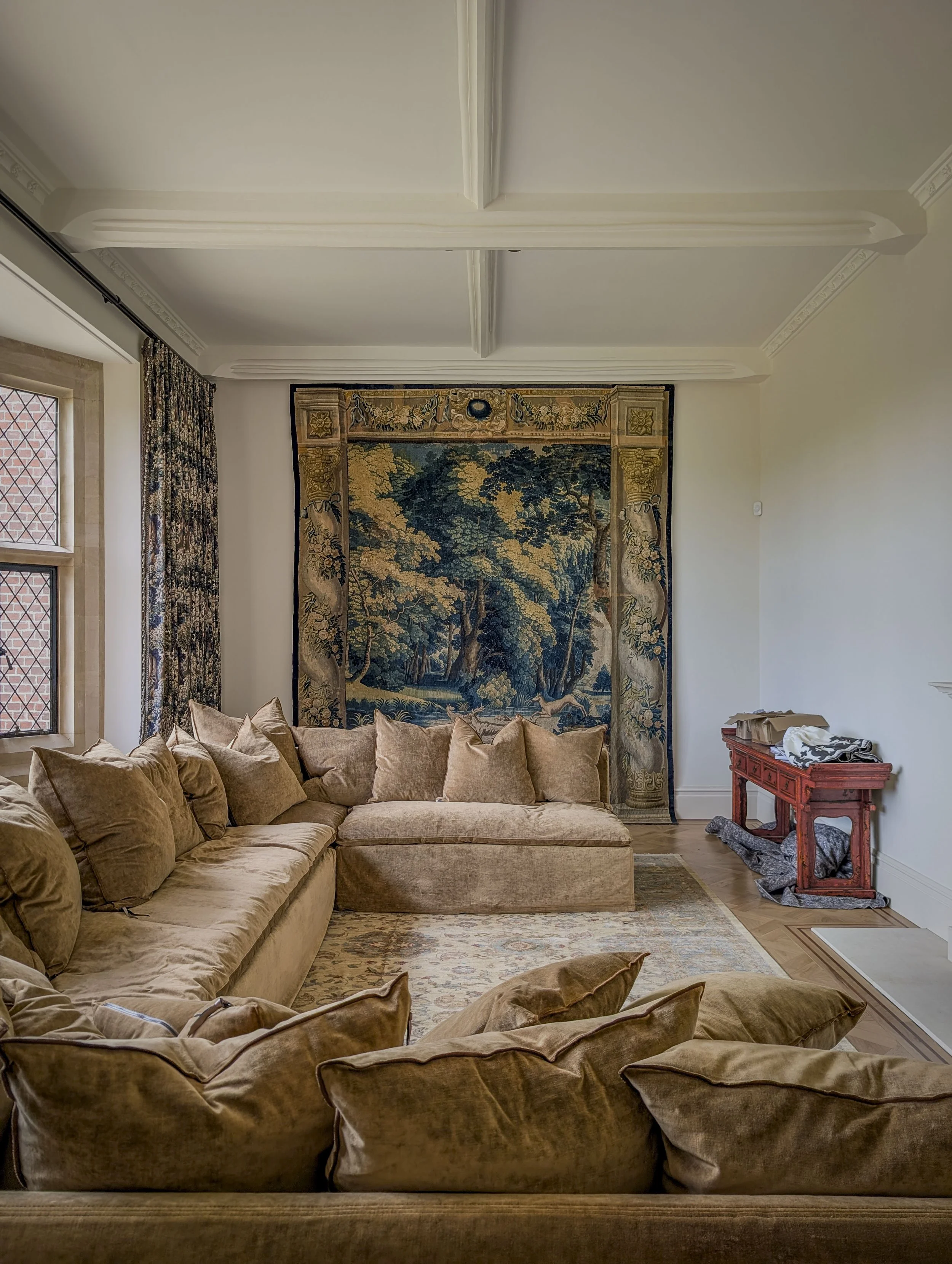
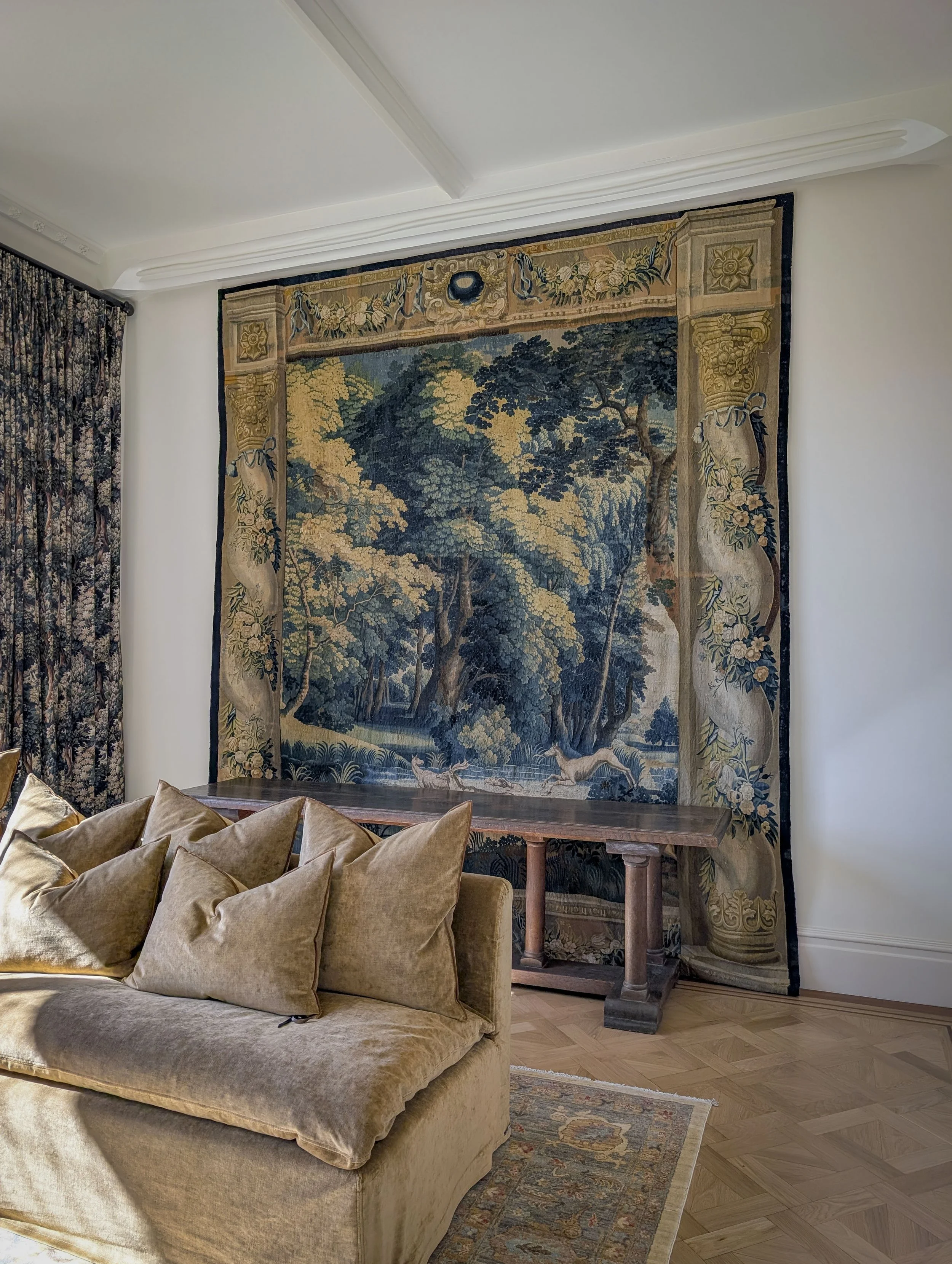
Seido Art Services was engaged by interior designer Natasha Meechan, a returning client from several previous projects, to assess, prepare and install a series of large-scale tapestries as part of a high-end residential renovation in Godalming, Surrey.
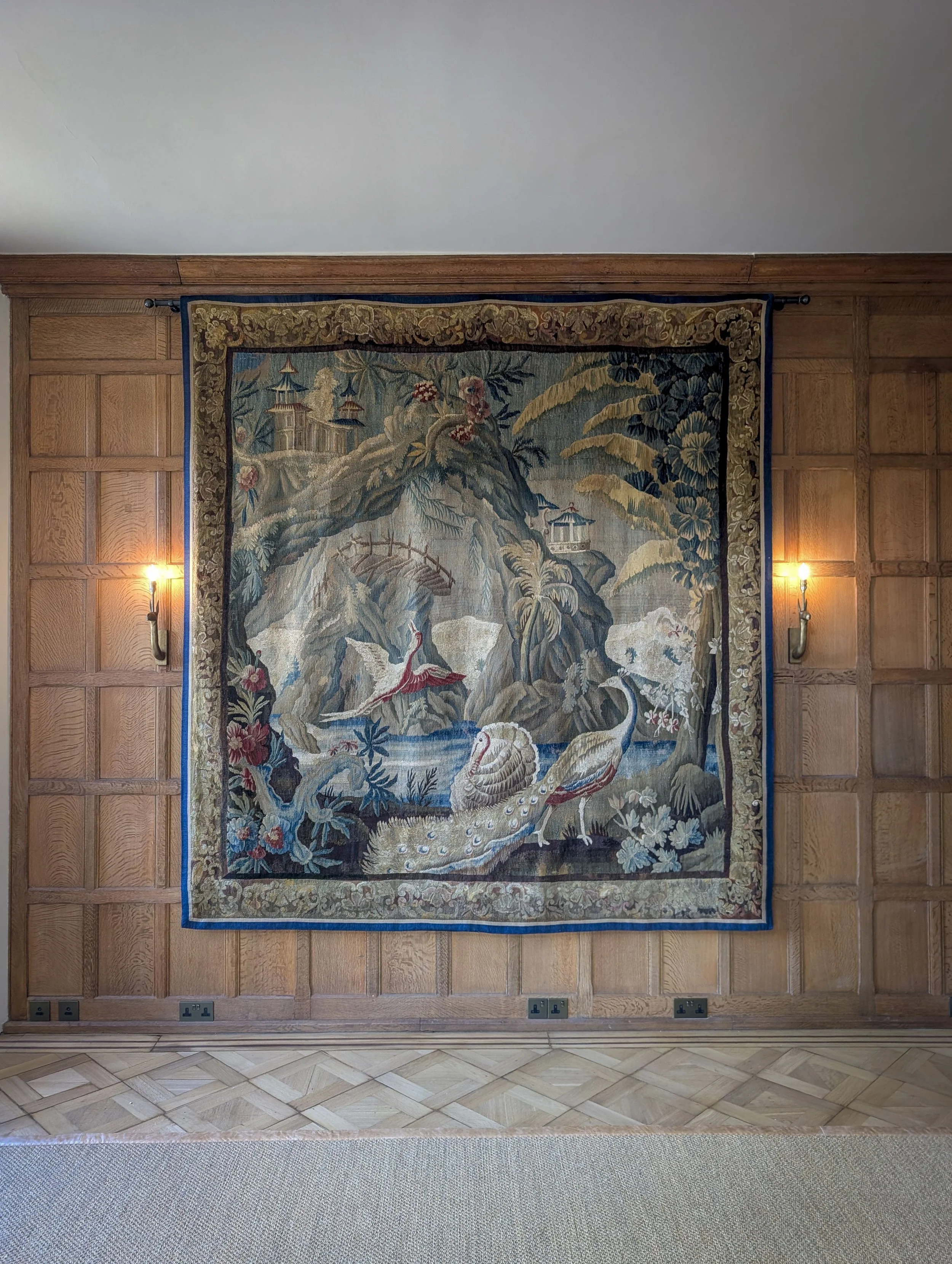
This installation combined several distinct areas of our expertise: conservation-level planning, bespoke brass rail sourcing, construction-site access planning and installation execution, brought together to install a set of high-value antique tapestries as centrepieces within the most important rooms of the house.
Assessment and Preparation
The tapestries were in storage at a separate property belonging to the client, so the first stage was a site visit to unroll and inspect both pieces. Measuring each tapestry accurately and checking for any existing hanging method, such as sewn loops or a rod pocket, at this stage determines what preparation work is needed before installation can even be scheduled.
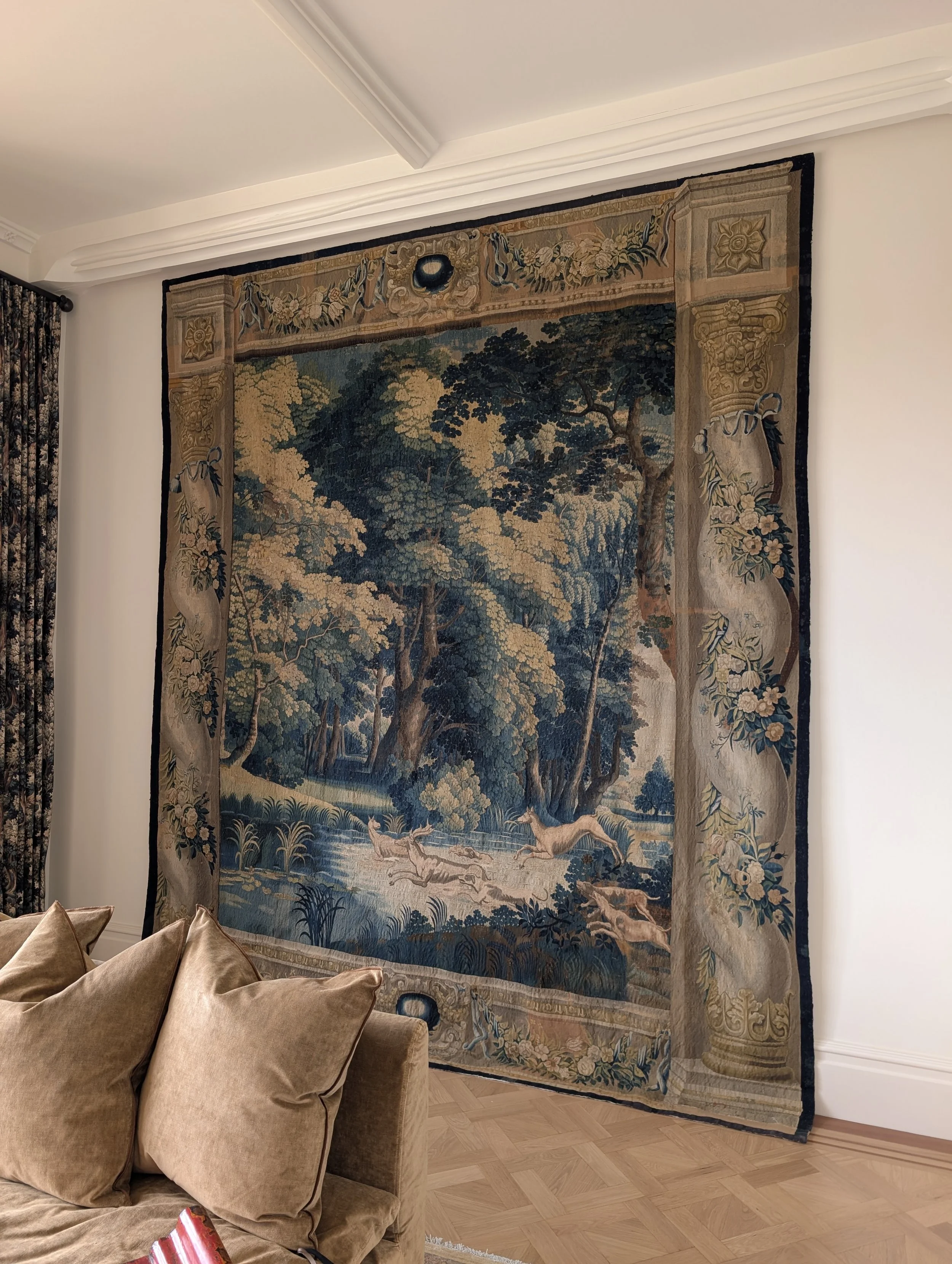
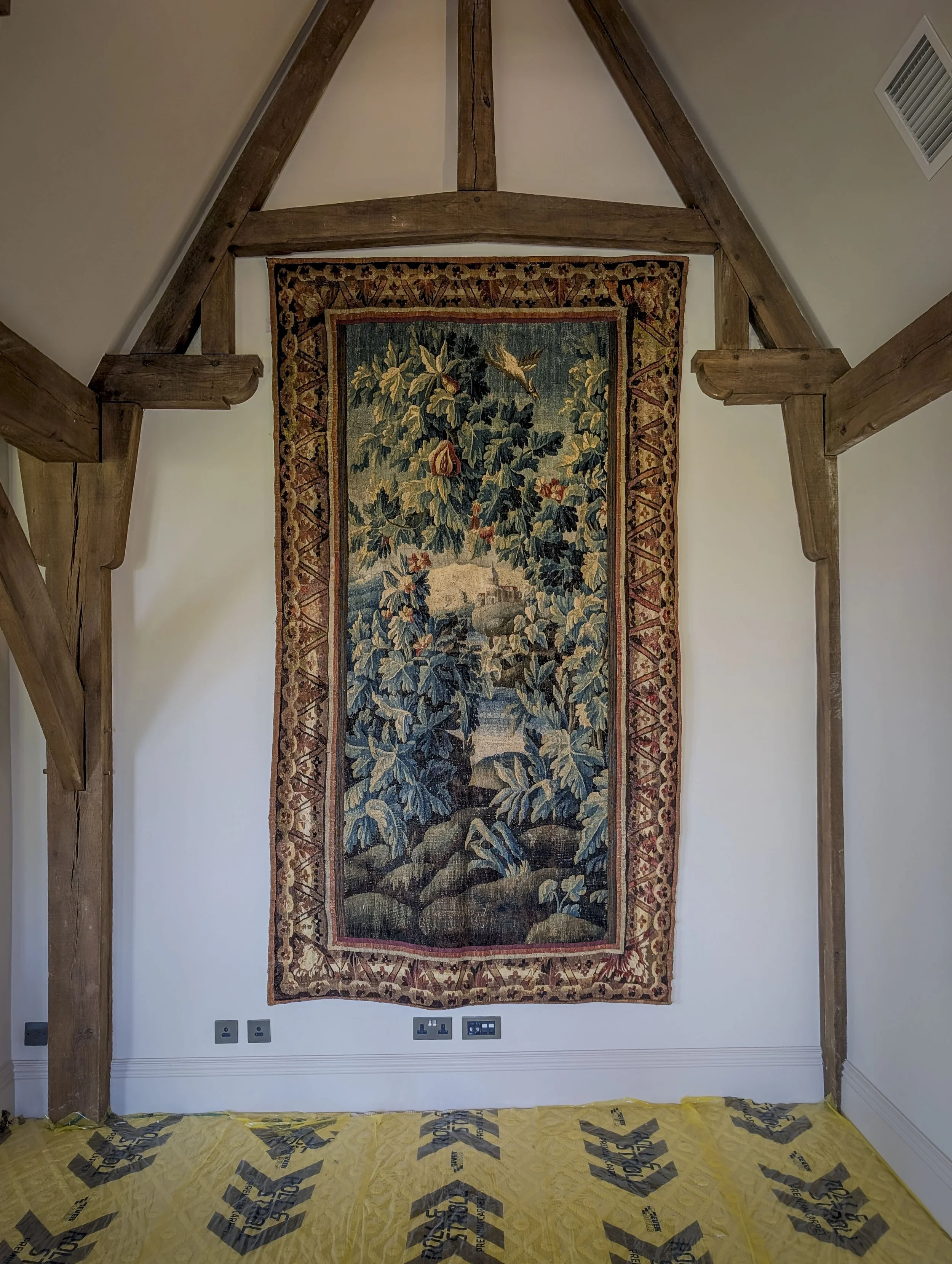
Neither tapestry had a hanging method suitable for the client's intended display, and both required new linings before they could be safely installed. One needed hanging loops added along its top edge, and the other was prepared for a Velcro-based mounting method. We arranged delivery of both tapestries to a specialist relining service for this preparation work, then collected them once complete ahead of installation.
Sourcing the Brass Rail and Planning Access
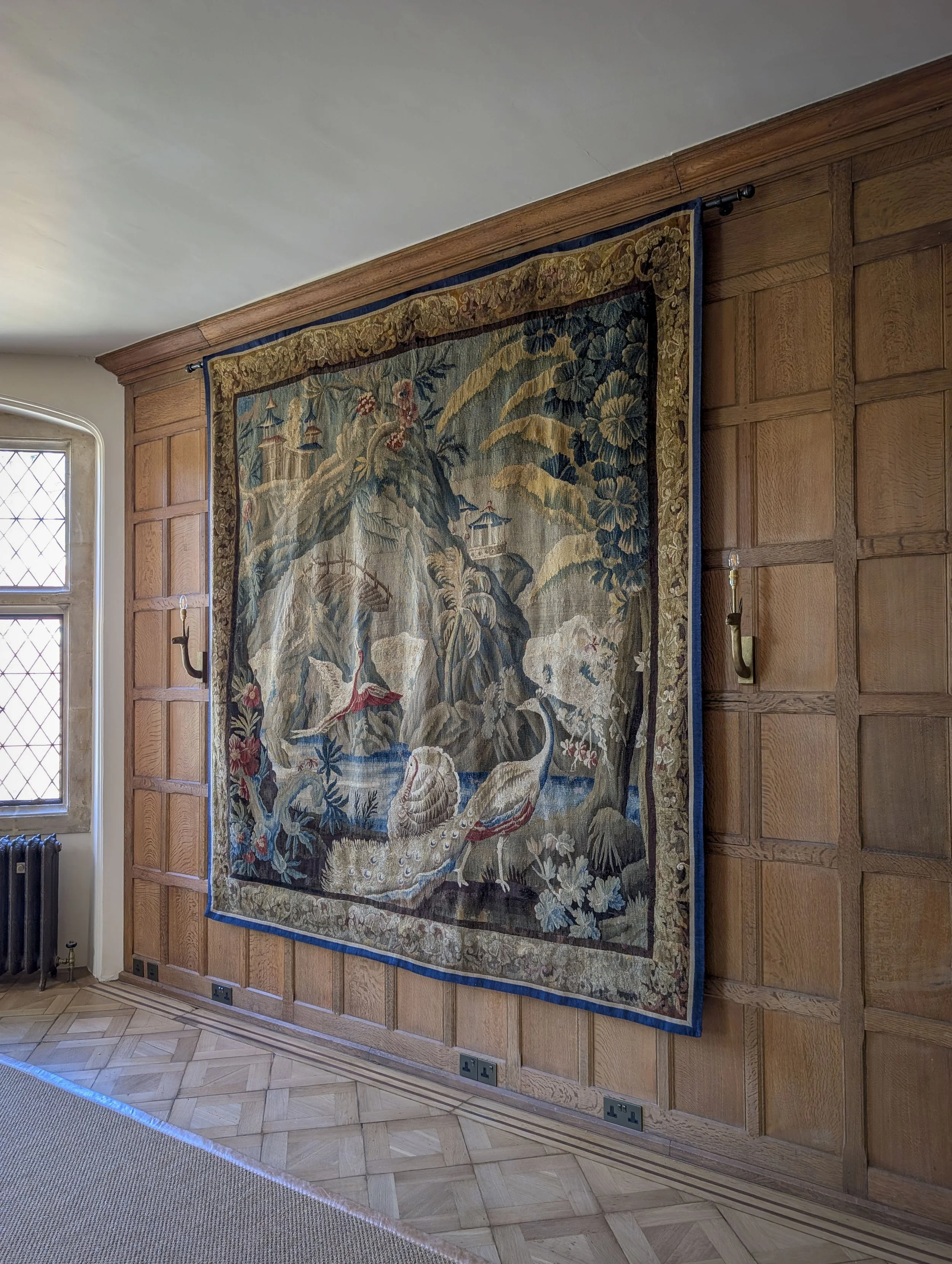
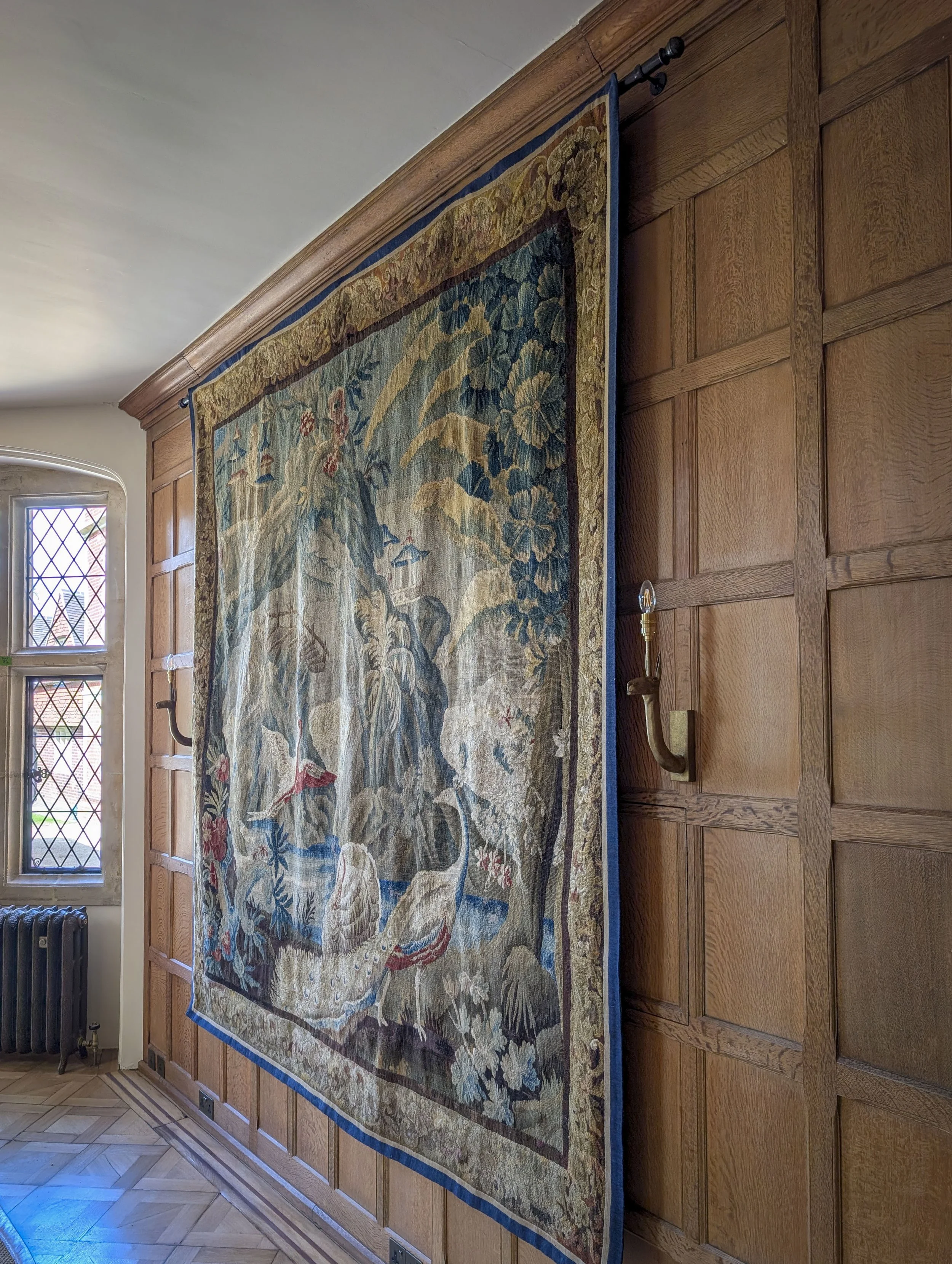
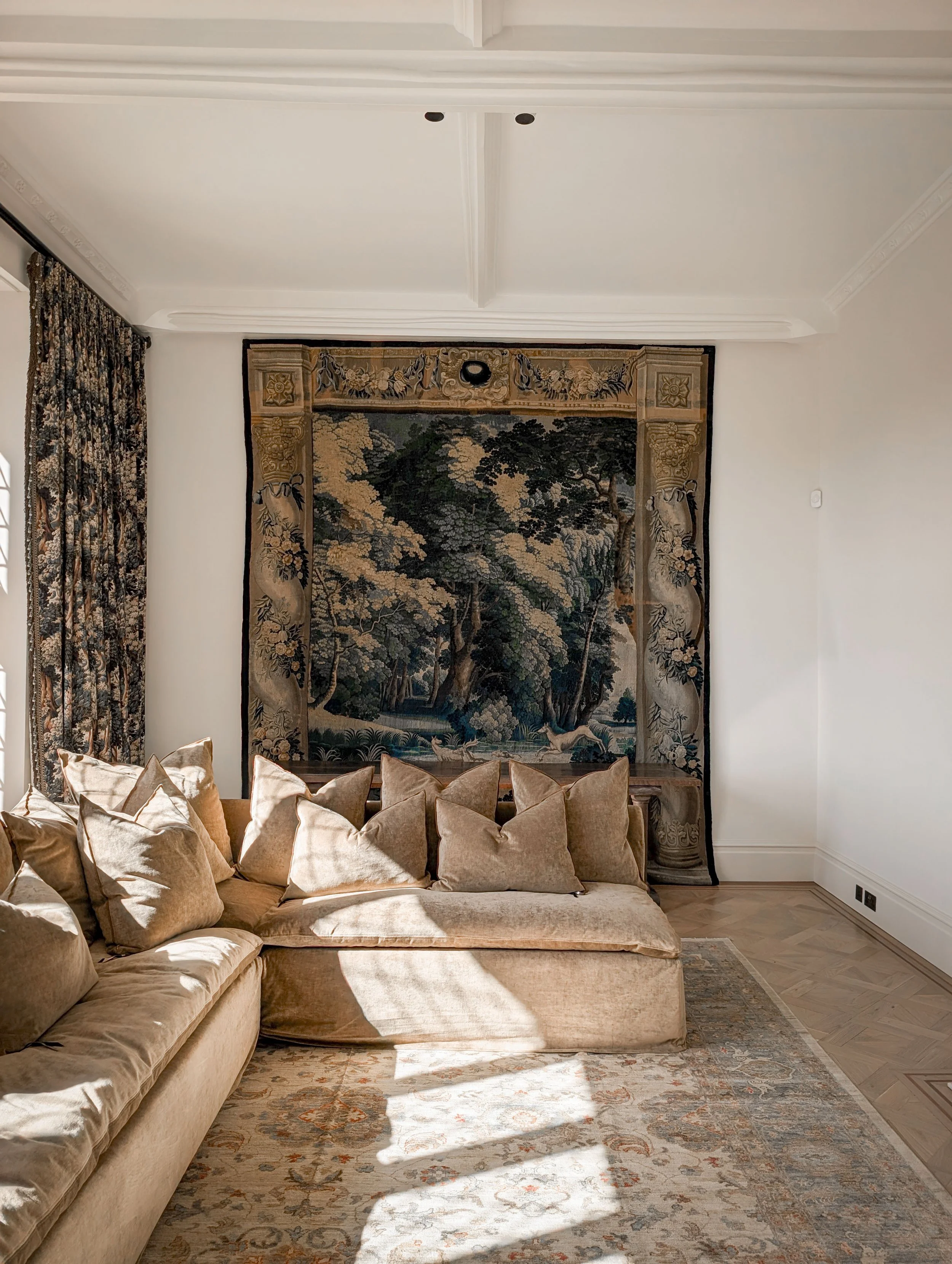
The client wanted one tapestry displayed as a deliberate design feature rather than simply mounted flat: suspended from it’s hanging loops from a brass rail, positioned in front of a section of antique wall panelling. Ahead of the installation date, we attended the renovation property in Godalming with brass rail samples so the client could choose between antique and bronze finishes for the rail itself. Once a finish was confirmed, we engaged a supplier to fabricate and deliver the rail specified for the installation.
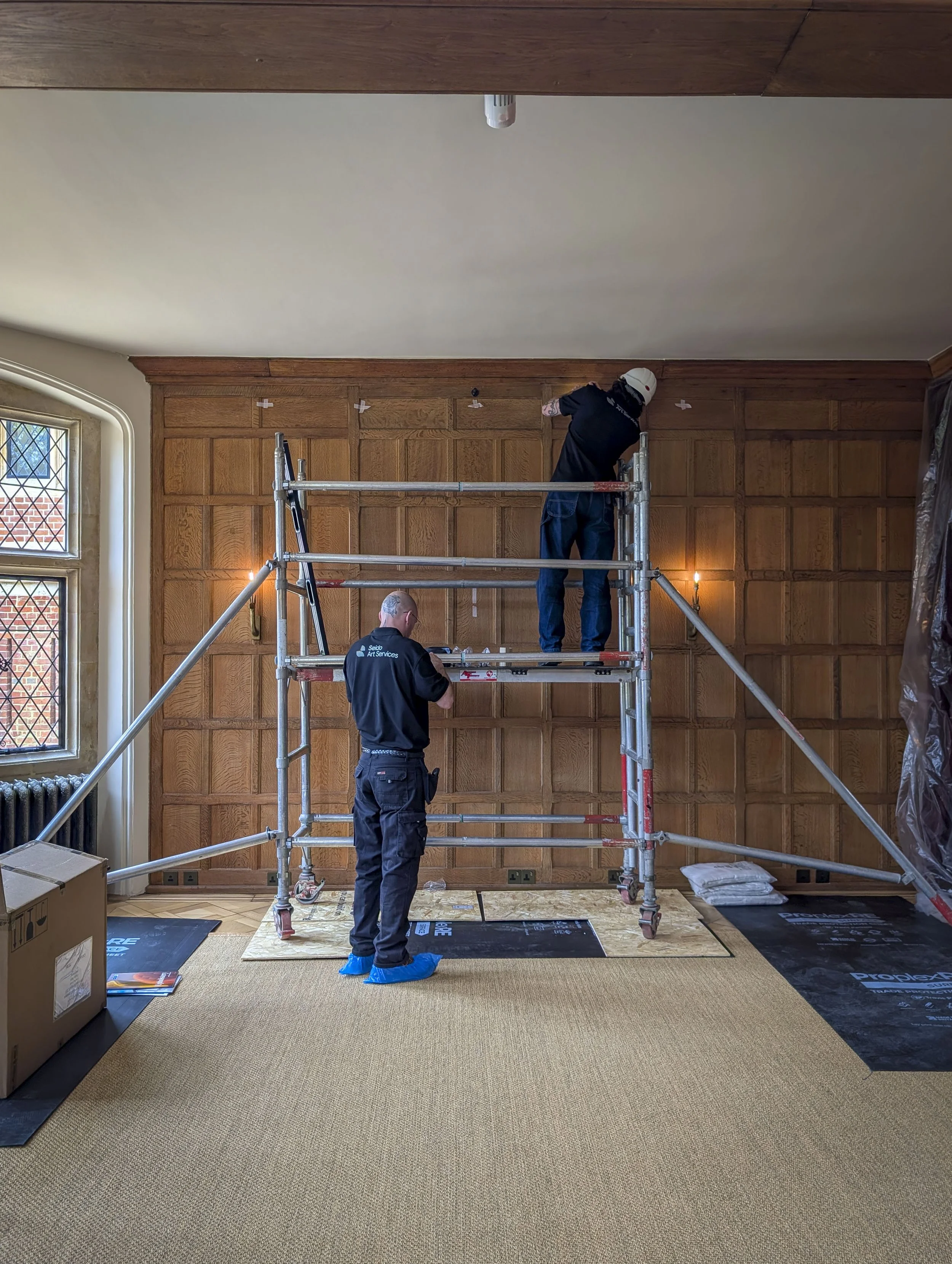
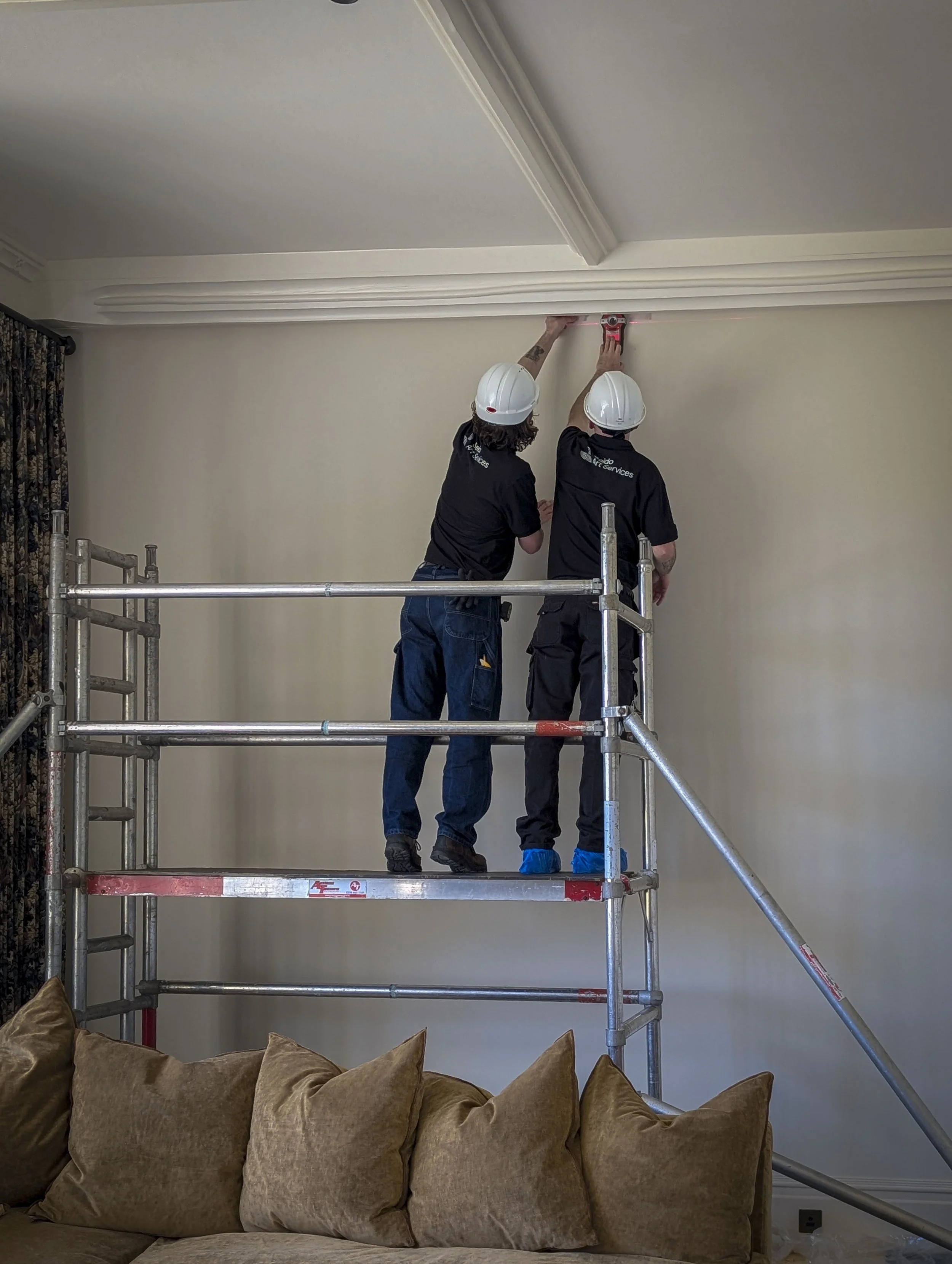
This same site visit also served as an access and materials assessment. Given the height involved in hanging tapestries of this scale, we determined that mobile access towers would be required to reach the working height safely, and that the floor beneath the tower's working area would need protecting with Corex and plywood sheeting before any equipment was brought in.
Installation Day
Handling a tapestry of this scale safely required three experienced art installers, and the same was true for carefully erecting and moving the access tower. The full team worked as one unit across both the brass rail installation and the Velcro-mounted piece.
For the Velcro-mounted piece, we used heavy-duty, industrial-grade Velcro throughout, but not attached directly to the wall. The Velcro is first stapled extensively along a wooden batten, and the batten itself is then fixed to the wall, distributing the tapestry's weight evenly along a rigid support rather than relying on adhesive contact with the wall surface alone.
Working Within a Live Renovation
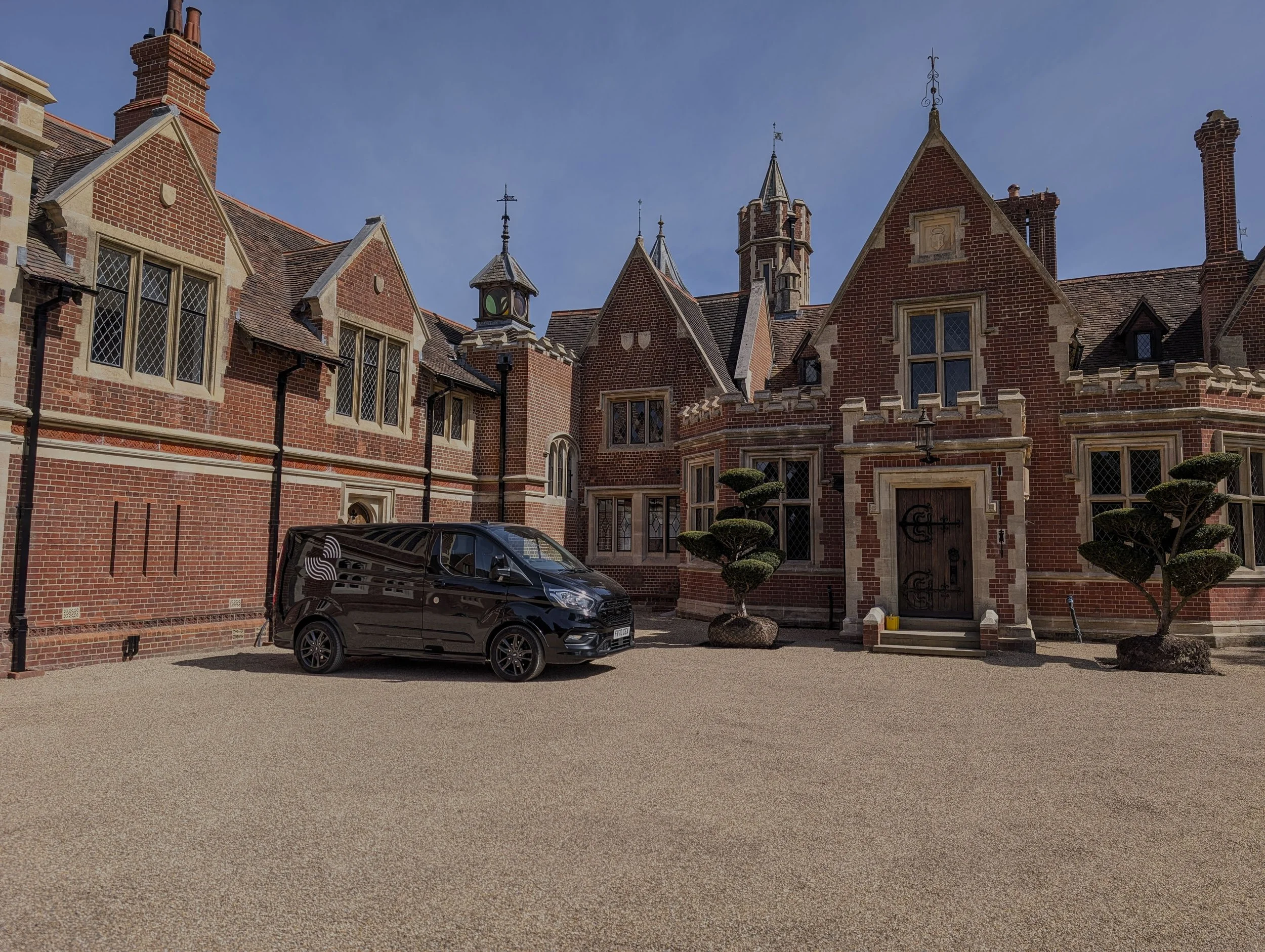
The property was still in the final stages of construction at the time of installation, which meant working alongside other trades rather than in a finished, empty space. Beyond the technical demands of the installation itself, this required ongoing coordination with site management: communicating our access and working methods in advance, and agreeing protected areas both for our team's equipment and for the tapestries themselves while other work continued nearby.
Projects like this are a good illustration of why specialist experience matters once an installation moves beyond a standard framed picture: relining, bespoke rail fabrication and construction-site access planning all had to come together correctly before the tapestries could go up.
If you're planning an installation involving tapestries, textiles or other non-standard artworks, get in touch to discuss your project, or read more about our fine art installation service.