
Picture Rail Systems & Ceiling Hanging Fixtures
info@seidoartservices.com // 07547323641
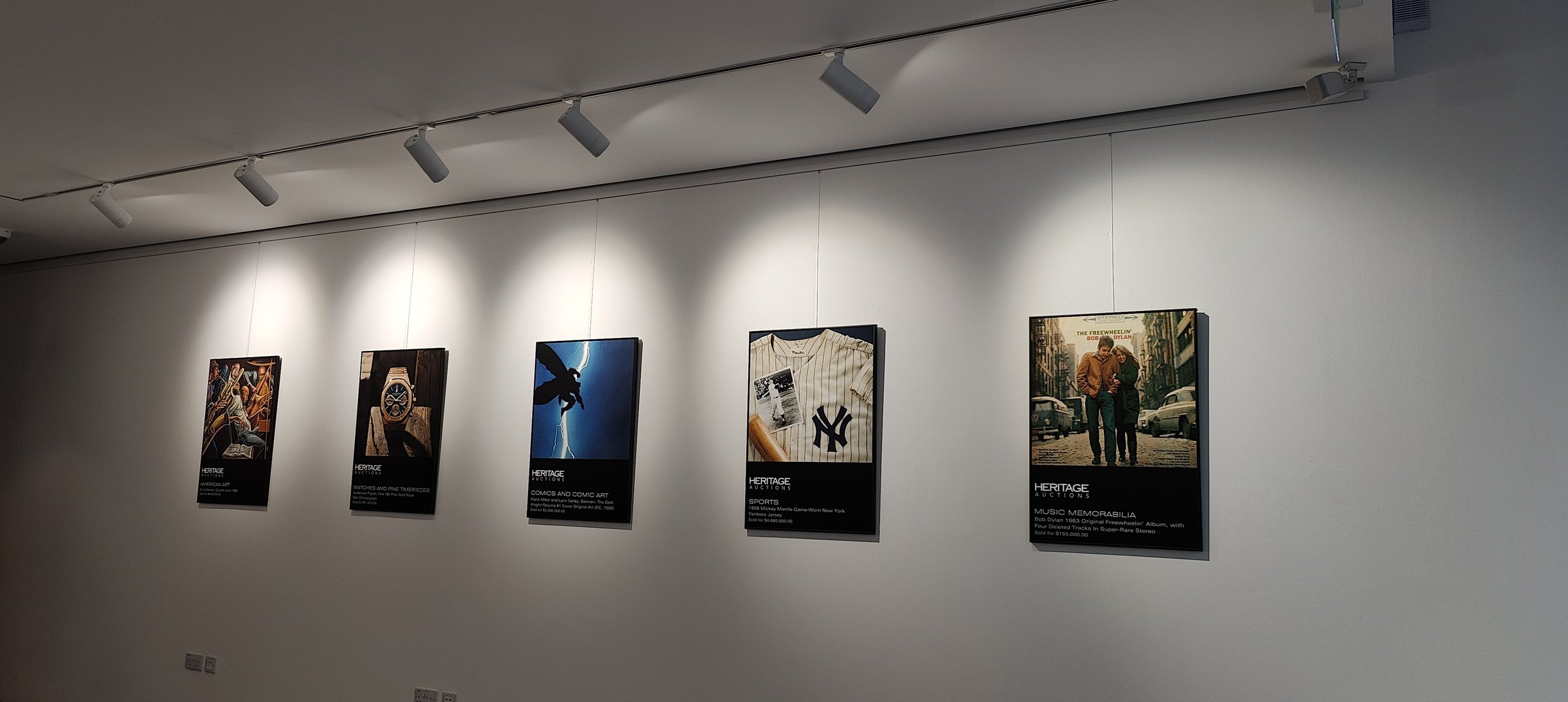
Picture hanging systems let you display and rearrange artwork without putting new holes in the wall every time a piece changes. Seido Art Services supplies and installs picture rail systems, in both aluminium and brass, and ceiling-mounted hanging fixtures, throughout London and the Home Counties, for clients who want a collection they can genuinely change over time, or who need a hanging solution for a wall that cannot be drilled into at all.
How Picture Rail Systems Work
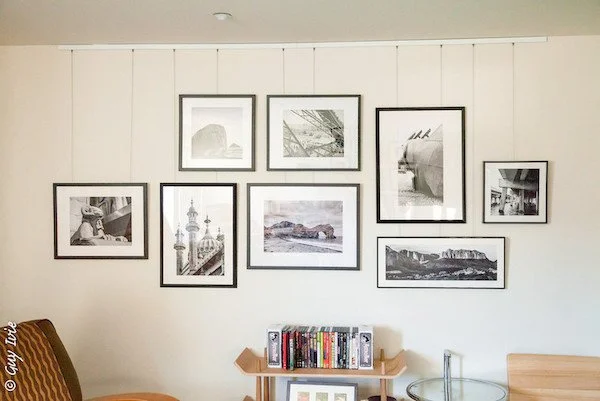
A picture rail is fixed along the wall, typically at or near ceiling height, with cables, rods or chain dropping down to hold each frame at the required height. Because each piece hangs independently of the wall itself, the whole arrangement can be raised, lowered or rearranged in moments, and a piece can be swapped for another of a different size without any new fixing being required.
This makes rail systems particularly well suited to:
Collections that change or grow over time, including galleries and private collectors who rotate work regularly
Rental properties and leasehold flats, where new wall fixings are often restricted
Period and listed buildings, where minimising new fixings into original plasterwork or wall surfaces matters
Offices, hotels and retail spaces that need to refresh their displayed artwork without recurring wall damage
We supply and install two distinct types of picture rail, aluminium and brass, chosen according to the space, the interior style, and how the client wants the system itself to read within the room.
Aluminium Picture Rail
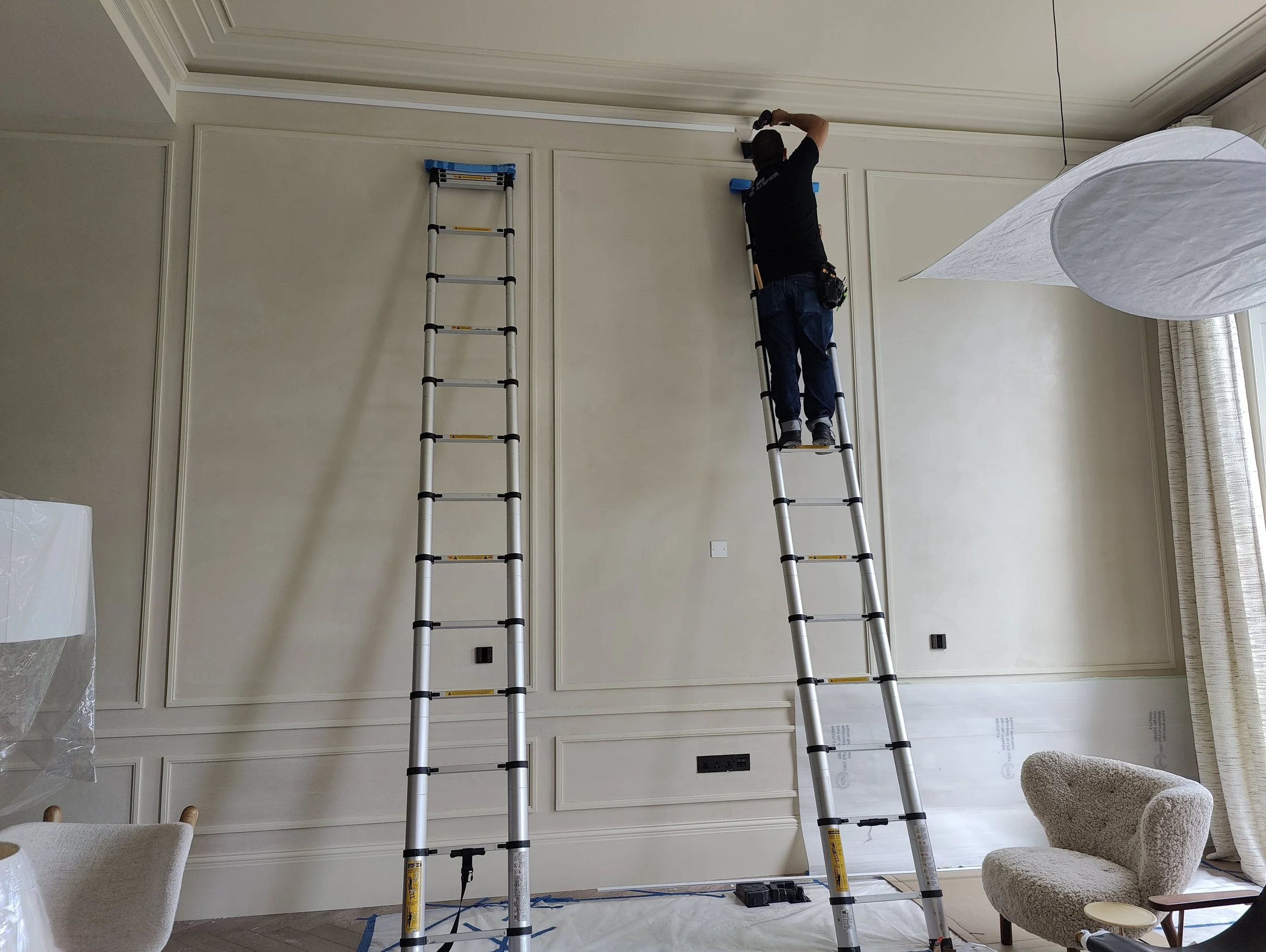
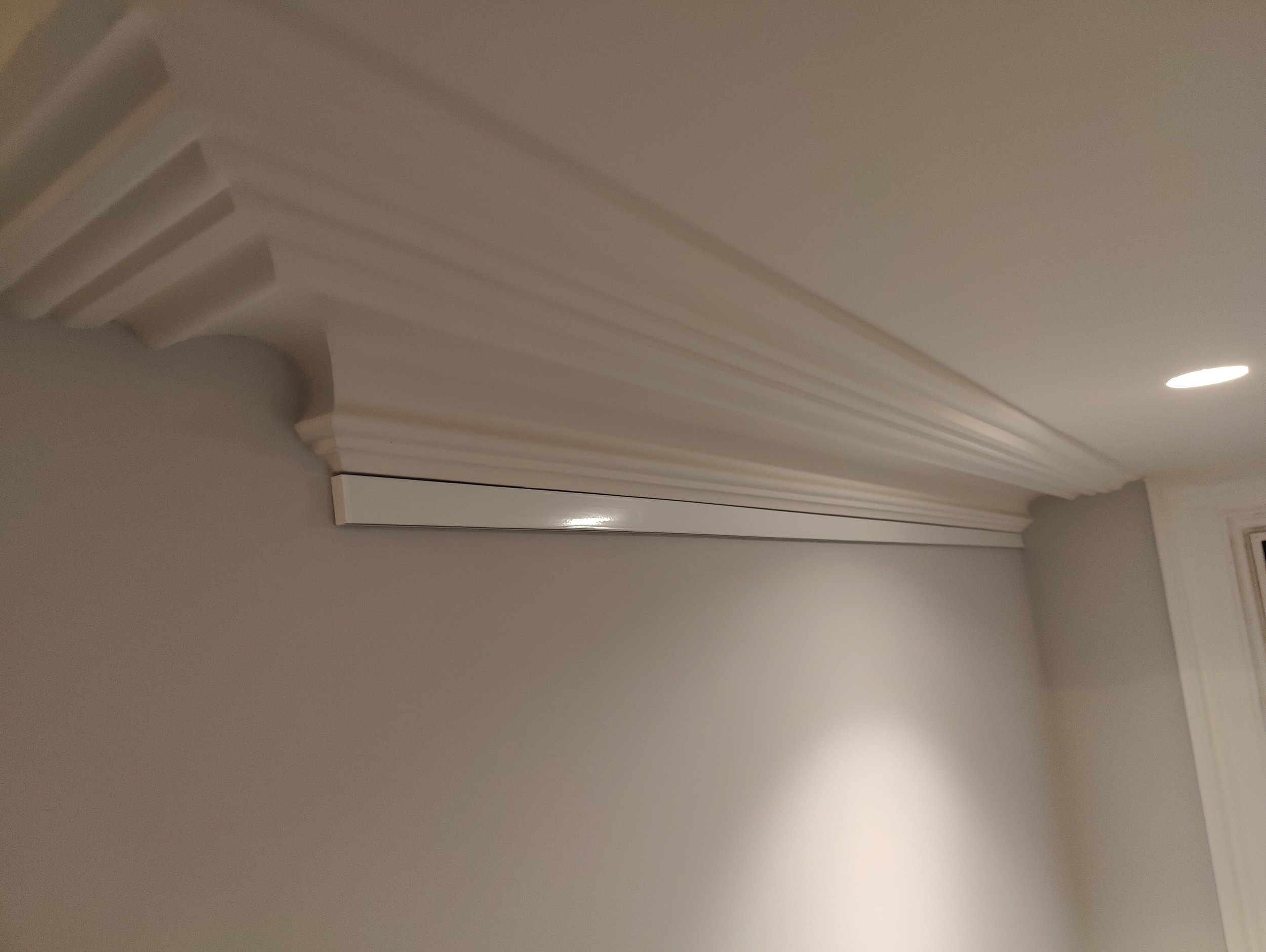
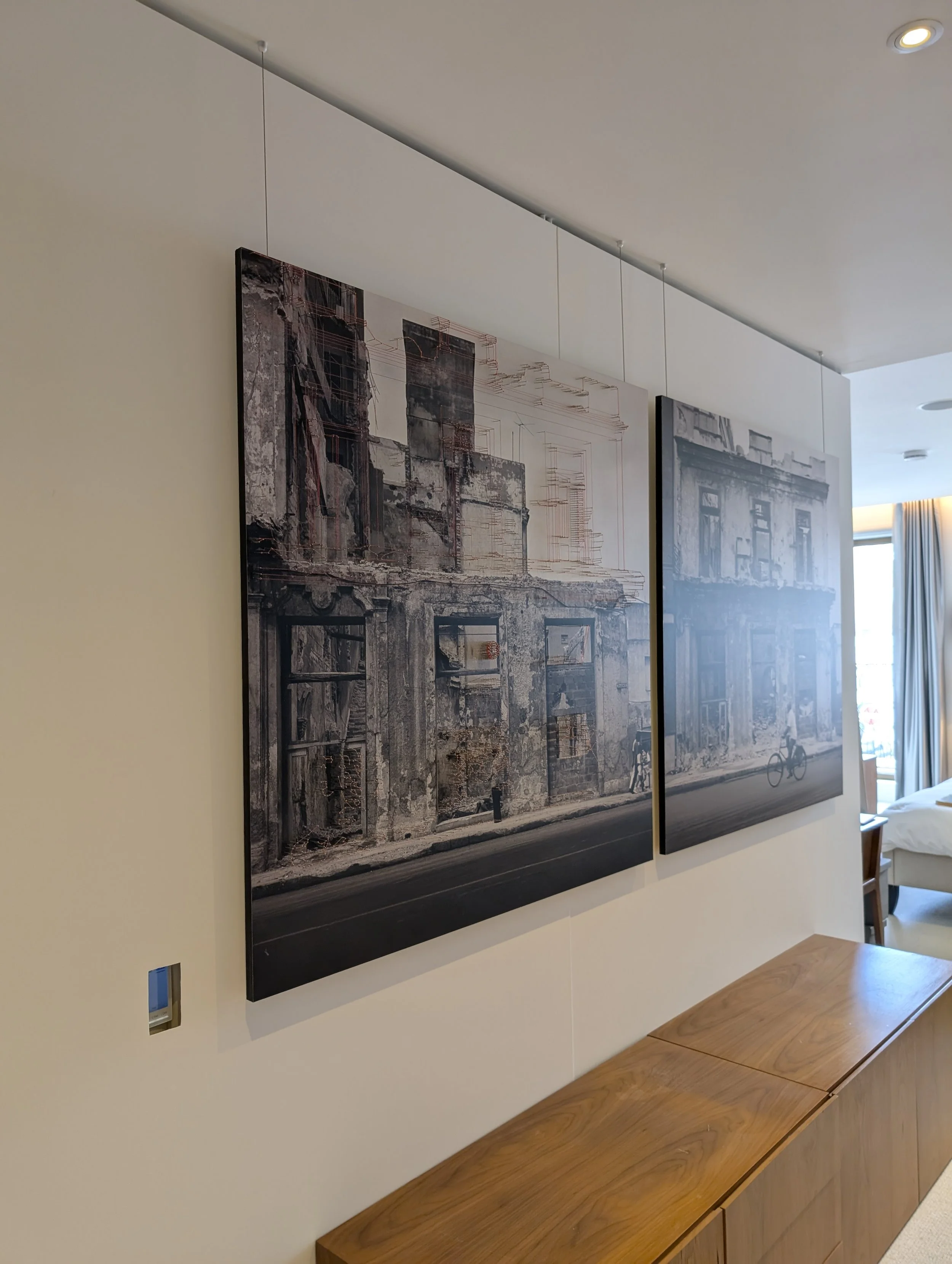
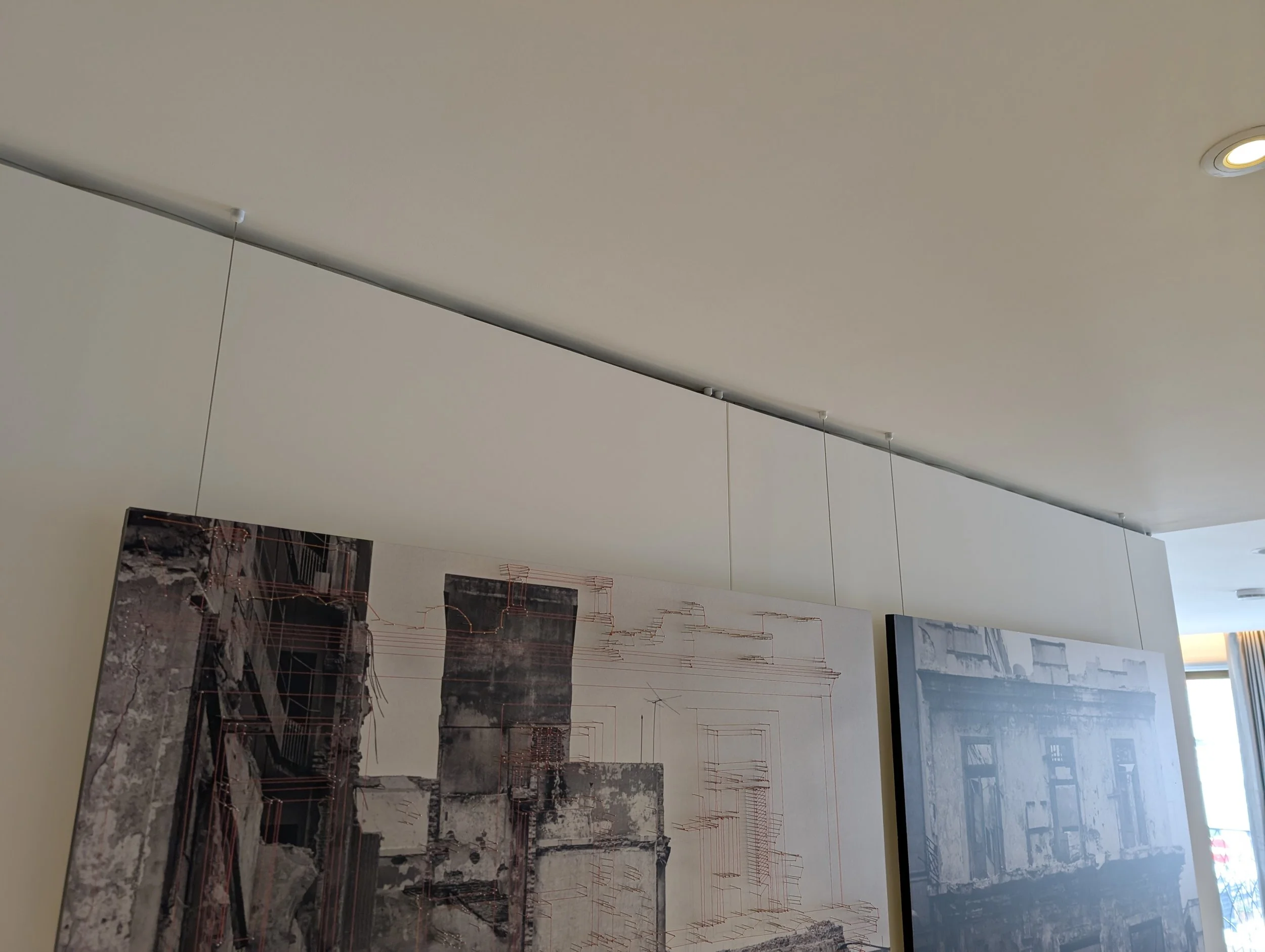
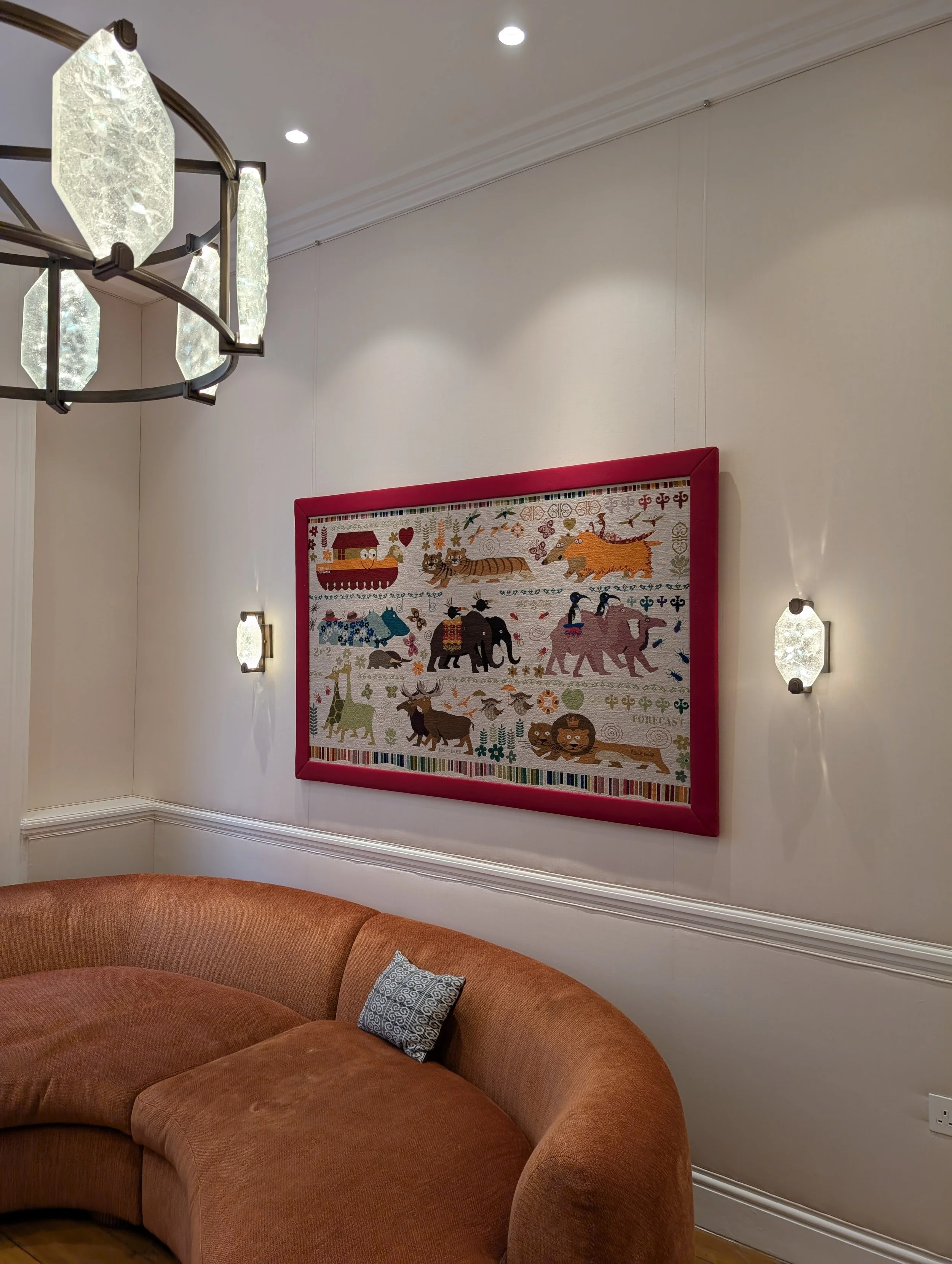
Our standard picture rail system is aluminium, supplied pre-painted white, though it can be painted any colour either before or after fitting to match the surrounding wall or woodwork. The profile sits less than 8mm proud of the wall, making it one of the most discreet hanging solutions available; once painted to match the wall, the rail itself becomes almost invisible, leaving only the suspended artwork visible.
Aluminium rail suits contemporary interiors where the goal is for the hanging mechanism to disappear entirely, with the artwork doing all the visual work. Rated capacity is up to 50kg across the full length of the rail.
Brass Picture Rail
Brass picture rail is a more traditional system, historically associated with stately homes and period interiors, where it was originally used to allow artwork to be rehung without damaging fine plasterwork or historic wall surfaces. In recent years it has also become popular with interior designers for a different reason: rather than sitting flush to the wall, brass rail is mounted on arms similar to curtain poles, projecting either 20mm or 40mm from the wall to the centre of the rail. This stand-off allows artwork to be suspended on chain in front of surfaces that couldn't otherwise take a picture, such as mirrored walls or fitted shelving.
Where aluminium rail is designed to be discreet, brass rail is generally chosen to do the opposite: it's intended to be seen, and to form part of the room's overall aesthetic alongside the artwork it displays. Weight capacity ranges from 40kg to 300kg, depending on the gauge of chain link used to suspend each piece, which allows brass rail to support substantially heavier or larger pieces than the aluminium system.
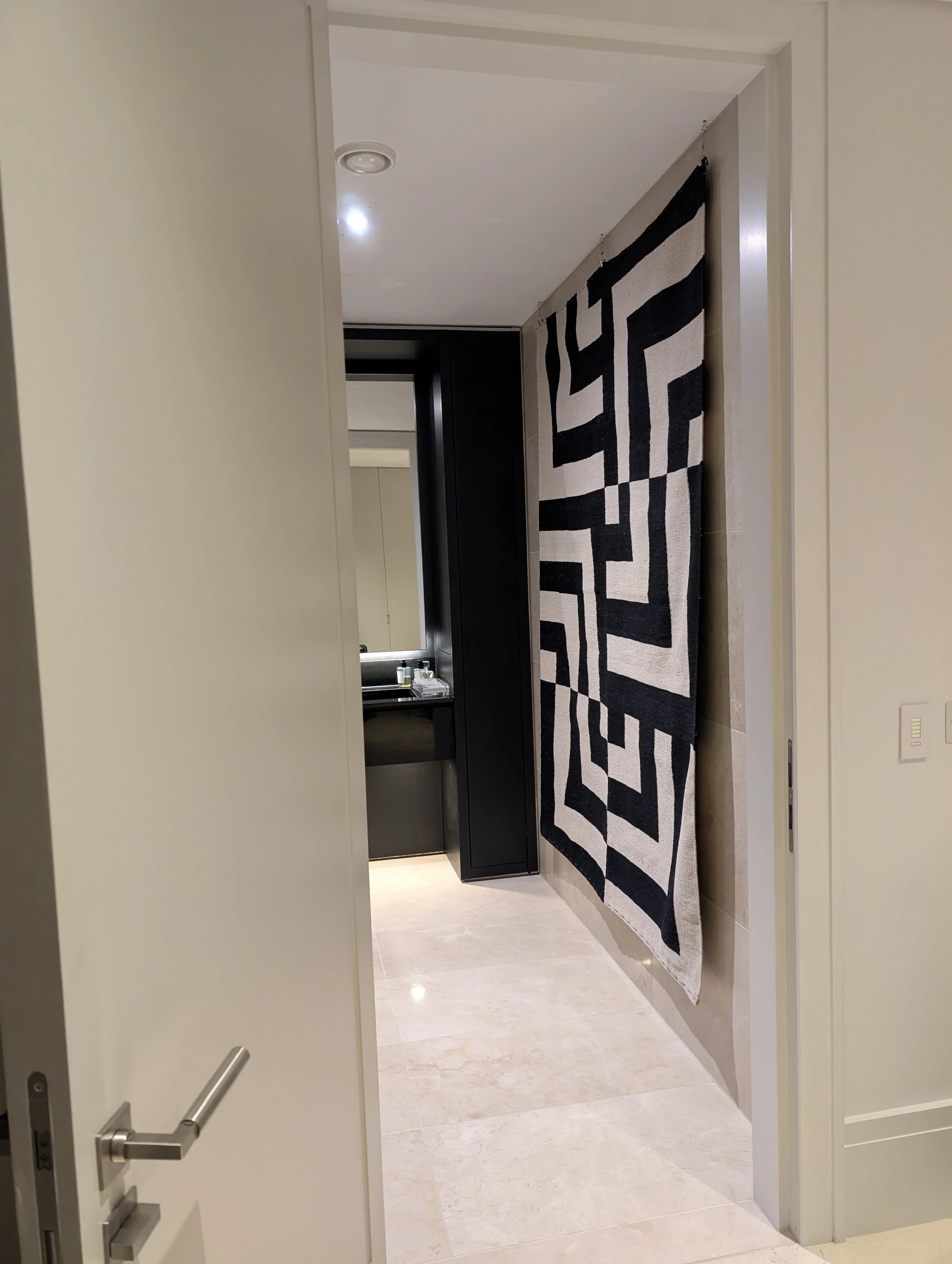
Brass rail can also be used to support large tapestries, where the tapestry has loops sewn along its top edge. The brass pole is passed through these loops before being fitted to its wall brackets, allowing the tapestry to hang directly from the rail itself rather than from separate cables. This gives a distinctive, traditional method of display in its own right, separate from picture hanging altogether.
Ceiling Hanging Fixtures
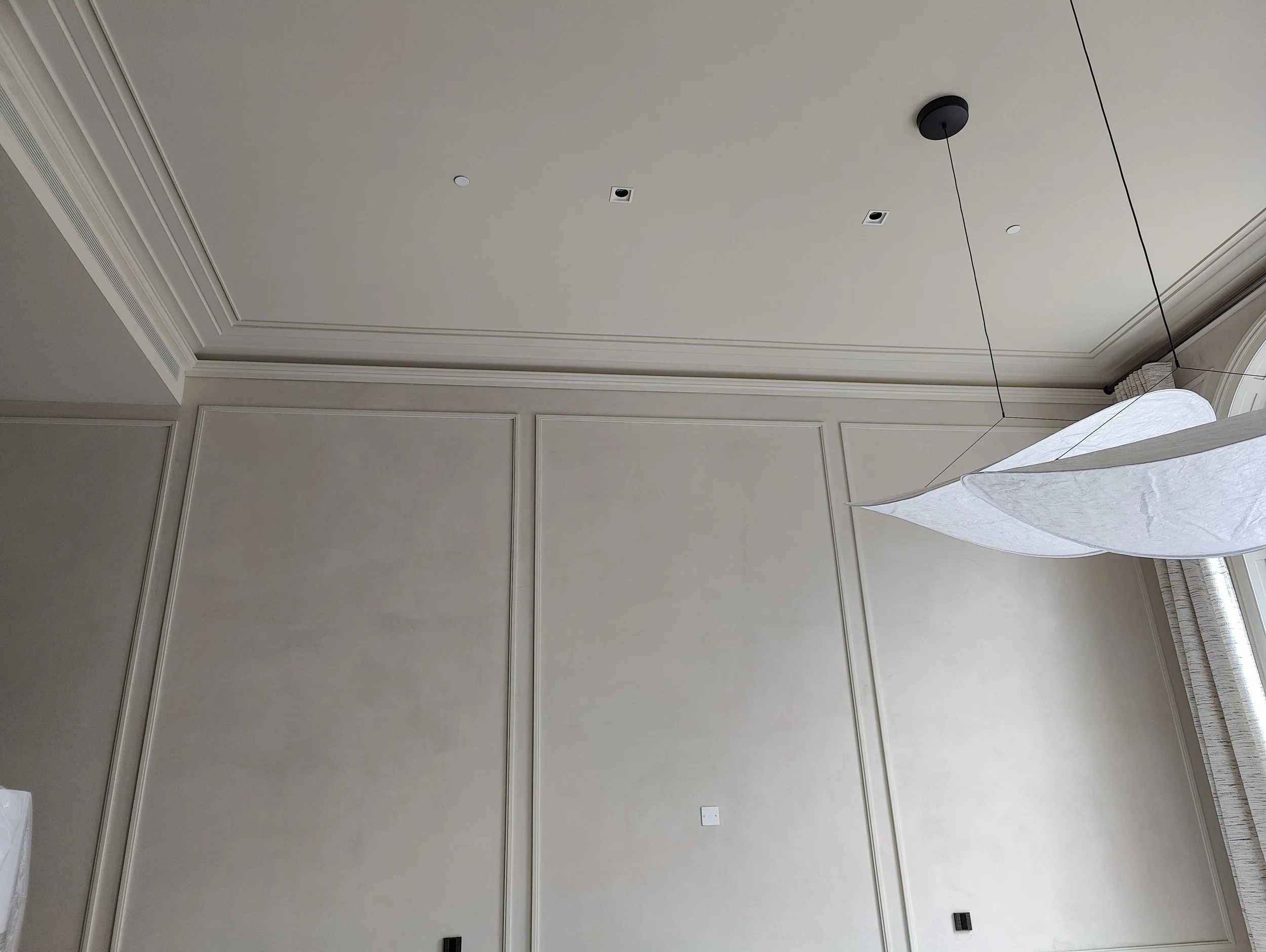
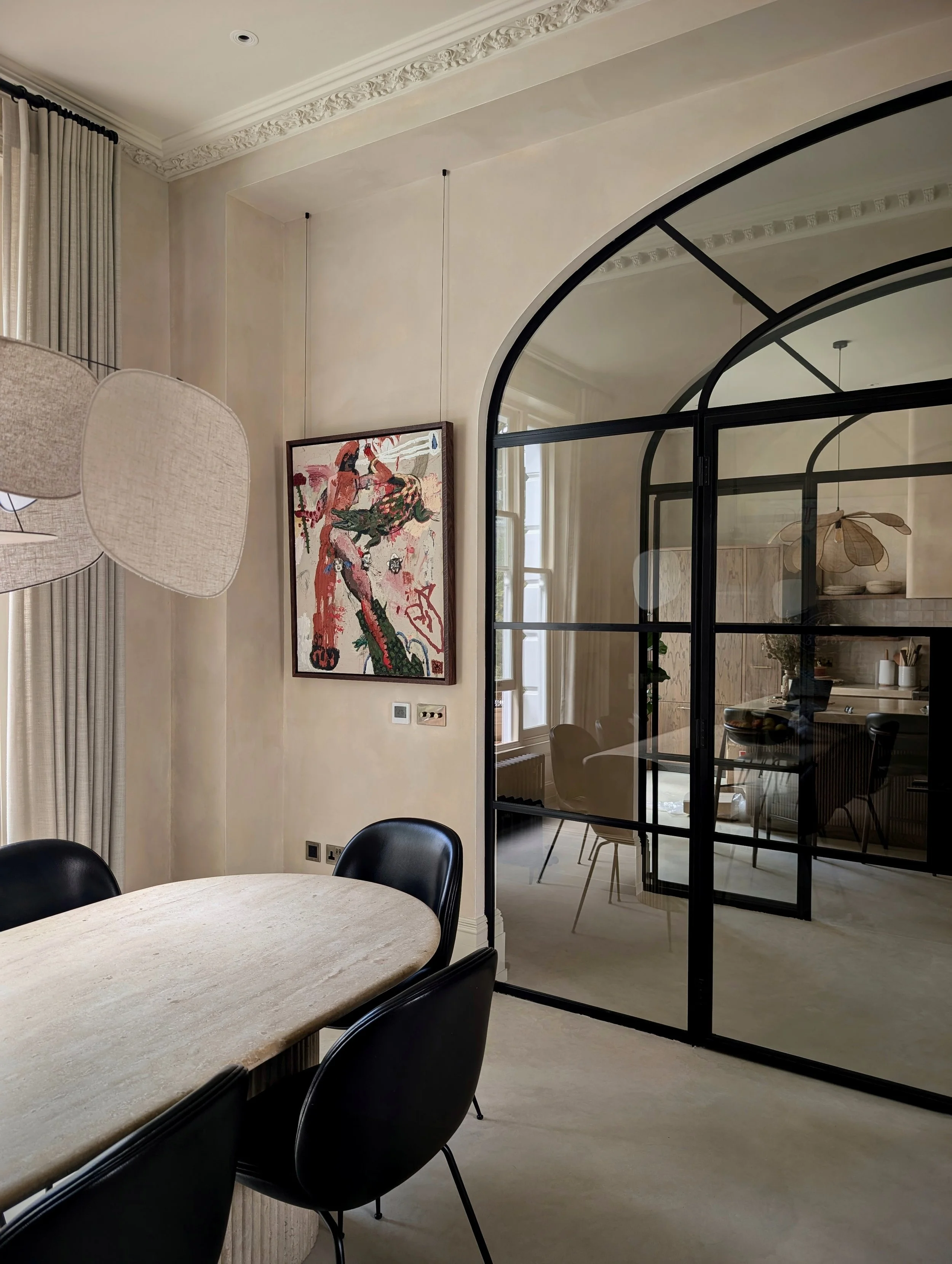
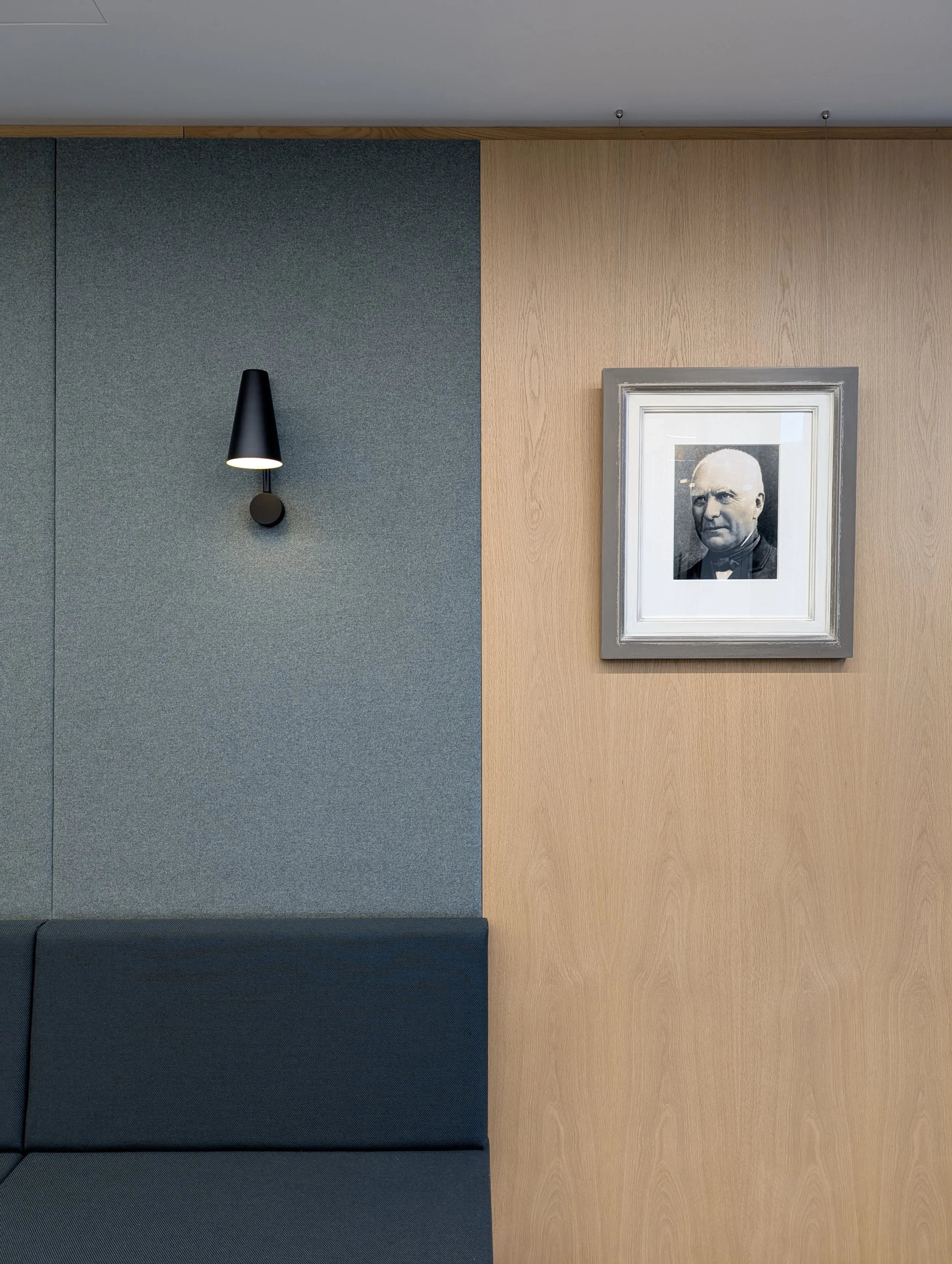
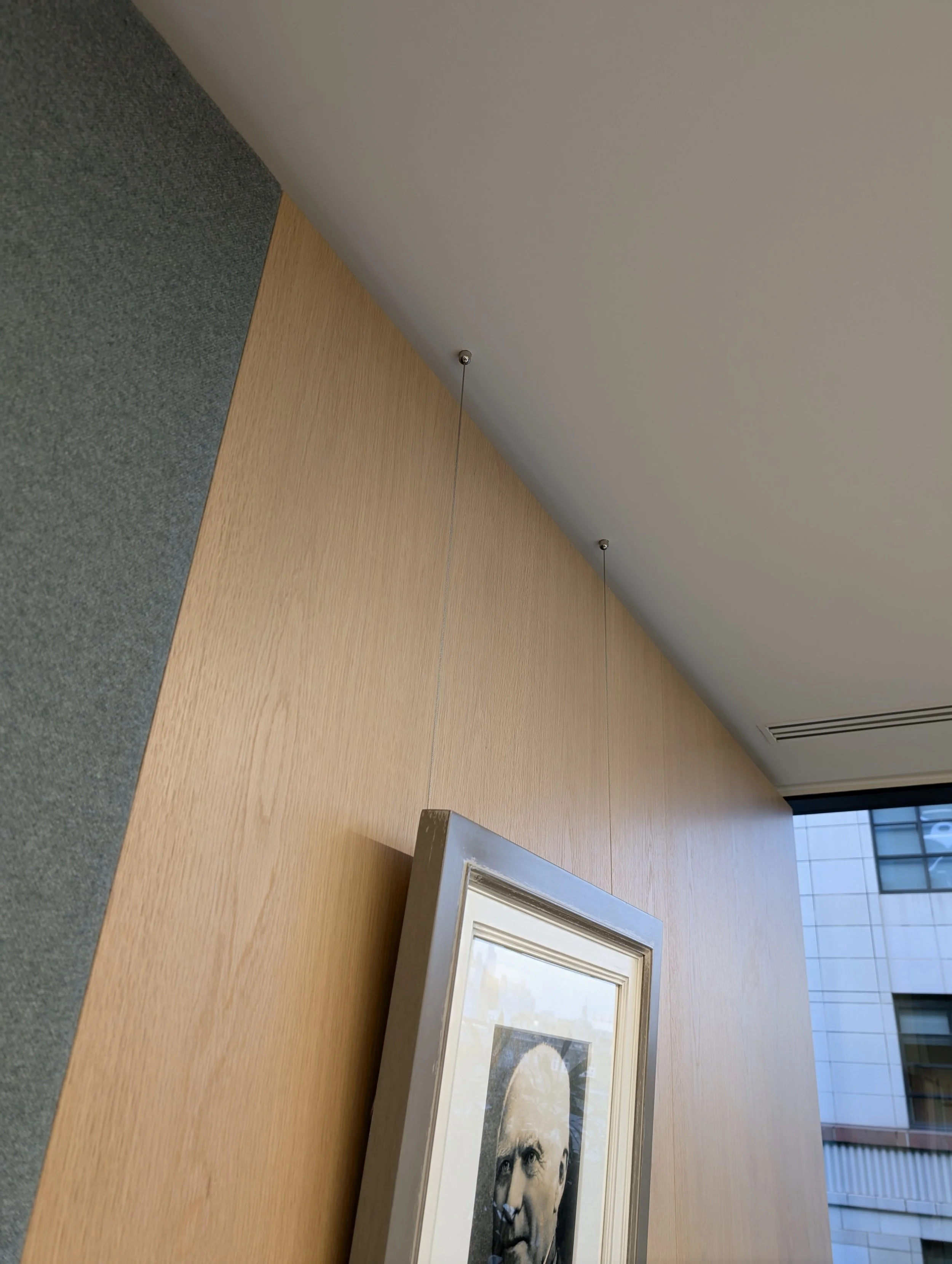
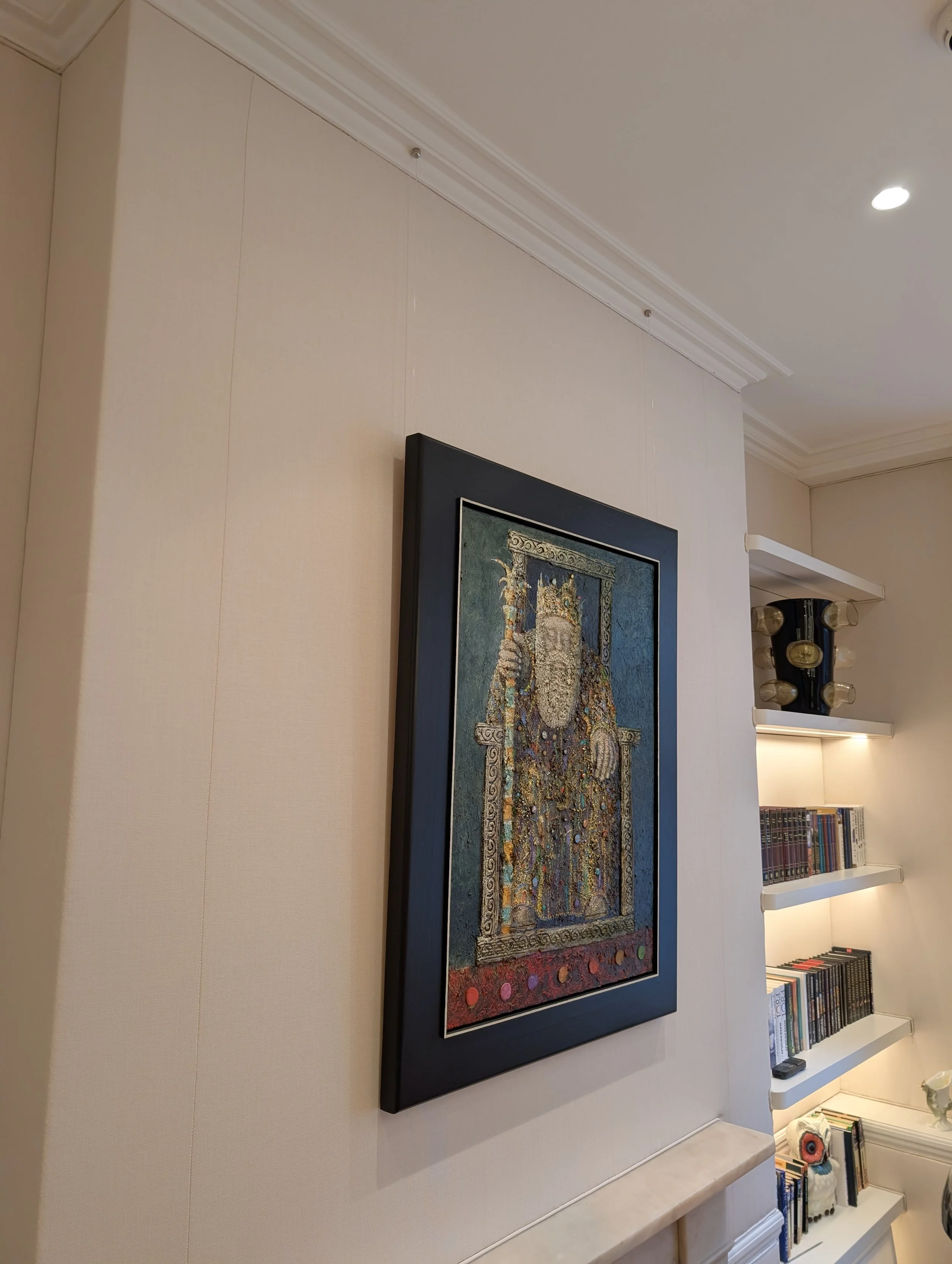
Where a wall rail isn't the right fit, we also supply and install ceiling-mounted hanging fixtures: discreet fittings, typically finished in chrome, matte white or matte black, that suspend a single artwork directly from two fixed points in the ceiling rather than from a wall-mounted rail.
Ceiling fixtures work differently to a rail system, and each suits a different situation:
A rail adapts, a ceiling fixture doesn't. Because a rail uses a continuous track, artwork can be swapped for a different size without changing the fixing. A ceiling fixture is sized and positioned for one specific piece, so changing the artwork usually means adjusting or reinstalling the fixture.
Weight capacity is lower. A ceiling fixture carries the load through two single-point fixings into the ceiling, giving a combined rated capacity of 10kg across the two fixings, considerably less than either rail system.
Some clients simply prefer the look. A small chrome, matte white or matte black fitting at the ceiling can read as neater and less visually present than a section of rail running along the wall, even where a rail would otherwise be a suitable option.
They cost less to install than a full rail system, which makes them a practical choice for a single piece rather than a whole wall or room.
They're often the only option when the wall itself cannot be fixed into. Fabric wallpaper, expensive decorative wallcoverings, polished plaster and veneered wood panelling are all surfaces we're regularly asked not to drill or fix into. A wall-mounted rail still requires fixings into the wall for its support brackets, so where the wall is off-limits entirely, a ceiling fixture lets us hang artwork in that location without touching the wall surface at all.
Choosing the Right System
As a general guide: aluminium rail suits contemporary spaces and lighter collections up to 50kg, where the fixing should be as invisible as possible. Brass rail suits period interiors, statement installations, and unusual walls such as mirrored surfaces or shelving, and comfortably handles heavier or larger pieces up to 300kg depending on chain gauge, as well as tapestries. Ceiling fixtures suit a single piece up to 10kg, particularly where the wall itself cannot be fixed into at all. Where you're unsure which applies to your space, we're happy to advise during a consultation or site visit.
Where These Systems Are Used
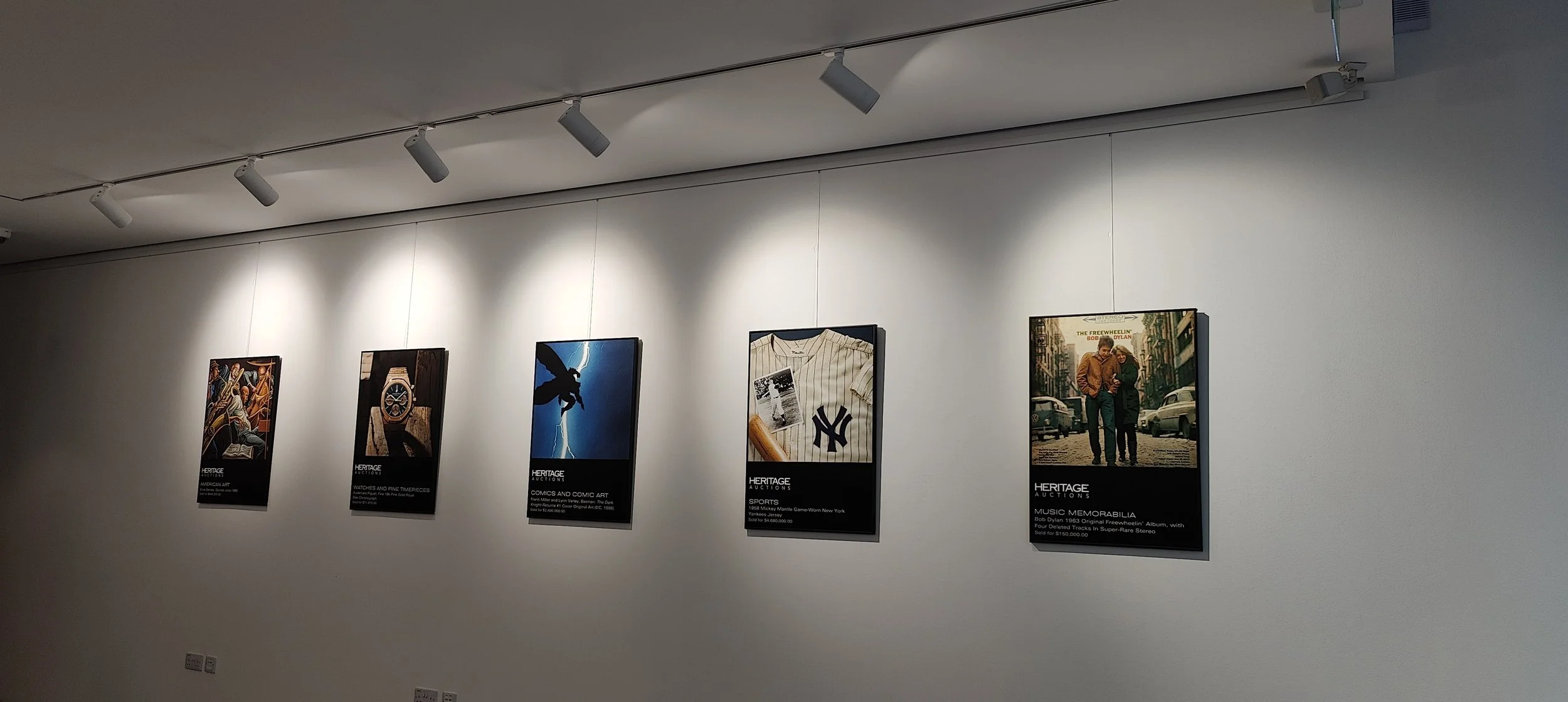
We install aluminium rail, brass rail and ceiling fixtures across a wide range of settings, including private homes, rental and leasehold properties, hotels, offices, galleries, and period or listed buildings.

Frequently Asked Questions
Still have questions? Take a look at the FAQ or reach out anytime.
-
Aluminium rail sits only 8mm out from the wall and is designed to be as discreet as possible, normally pushed right up to the ceiling or the coving; it's supplied pre-painted white but can be painted any colour. It is used with clear nylon or steel wires which typically fit inside the track itself so where the wire connects to the track is hidden.
Brass rail projects 20mm or 40mm from the wall on curtain-pole-style arms and is designed to be visible, often used as a design feature in its own right, particularly over walls such as mirrors or shelving that can't be hung into directly. -
A picture rail is a continuous track fixed to the wall, allowing multiple pieces to be hung and rearranged along its length. A ceiling hanging fixture suspends a single piece from two fixed points in the ceiling and is sized to that specific artwork. Rails suit collections that change over time; ceiling fixtures suit a single piece, particularly where the wall itself cannot be fixed into.
-
Aluminium picture rail is rated to 50kg. Brass picture rail ranges from 40kg to 300kg, depending on the gauge of chain link used to suspend the artwork. Ceiling hanging fixtures are rated to 10kg combined across their two fixing points. We confirm the appropriate system for your artwork during consultation.
-
A rail system requires fixings only at the point the rail meets the wall, rather than a new fixing each time a piece is hung or changed, which significantly reduces the number of holes made over the life of the display. A ceiling fixture avoids fixing into the wall entirely, which makes it a suitable option for wall surfaces such as fabric wallpaper, polished plaster or veneered panelling that we would otherwise be unable to drill into.
-
Yes, where the tapestry has loops along its top edge. The brass rail system is suitable as the pole is passed through the loops before being fitted to its wall brackets, allowing the tapestry to hang directly from the rail rather than from separate cables.
-
Yes. Because a rail system typically requires fewer new fixings than repeatedly hanging and re-hanging pictures directly into the wall, it's a common choice for rental properties provided there is permission from the landlord as the picture rail does need to be fitted on to brackets screwed to the wall.
-
It's possible for very light, single items, but getting the fixing right for the ceiling or wall construction, and calculating safe weight distribution across the system, is where most DIY installations run into difficulty. We supply and install both systems as a complete service, so you don't need to source parts or tools separately.
-
Cost depends on the length of rail required, whether aluminium or brass is chosen, and whether the project involves a rail system or a ceiling fixture, which is typically the lower-cost option of the two. We do advise that the system is a more premium solution than hanging artworks directly to the wall but it comes with the long term benefits if you want to be able to change artworks with ease.
Contact us with details of your space and what you are looking to achieve and we'll provide a tailored quotation. -
We install picture rail systems and ceiling hanging fixtures throughout London and the Home Counties, with projects further afield across the UK available by arrangement.